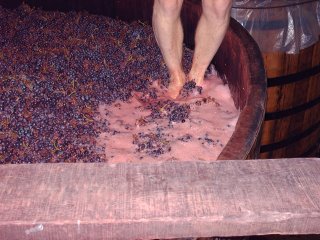
My how quickly a month goes by. So much has happened in the last month, that my posting rate has declined slightly, but Im going to try and post more frequently this month. What better way to start than with our monthly on-line festival of wine that is Wine Blog Wednesday.
Ryan and Gabrielle Opaz of Catavino have selected a theme, that is very close to their hearts, vineously and of course geographically. I really like the geography themed WBW because they encourage us to explore new regions and Im sure in many cases unfamilar regions. Now most peoples experience of Portugese wines will be limited to the occasional glass of port after dinner (and many of them will consequently blame the horrendous hangover the following morning to that single glass of port!!).
The wine Ive selected for this WBW is Quinta dos Roques Reserva 1999 from Dao. Its a Denominacao de Origem Controlada, which is the highest quality rating in Portugal. Quinta dos Roques is a relatively new estate, the vineyards were replanted in the 80's and they made their own wine from then. It is a curious blend of traditional grapes and wines, made in a modern winery, to a fairly modern style. Ive always considered the wines of Portugal to be very rustic, more food orientated than drinking on their own kind of wines, but I think that reflects the whole cultural impact of wine and cuisine that you find on the continent, and that seems to be missing from the new world.
The Reserva is a blend (as it would seem most Portugese reds are), predominantly Touriga Nacional, with a bit of Tinta Roriz and Tinta Cao, some Alfrocheiro and a dash of Jaen. All thats missing is the high alcohol content and it could probably pass off as a half decent port! The fruit comes from a single vineyard, the Peach Tree (Pessegueiro) vineyard. It spent about 14 months in barrel before being bottled.
On the nose it has spicy dark fruit aromas, it kind of reminds me a bit of xmas pudding, you have a touch of spice to it, raisins, cherries, there are even hints of chocolate here too. There is something almost feral in there too, cant quite pin it down, but it isnt off putting. From the nose I would have to say that I think this wine has seen better days, dont get me wrong its still drinkable, but I reckon its glory days were maybe a year or two ago.
On the palate the dark fruit comes through bathed in spices, more cinnamon with hints of ginger spices too. The tannins are still quite firm, and the wine follows through with a rich chocolatey finish which almost contradicts my earlier thoughts about being past its prime. I dont think this is the kind of wine to drink on its own. It needs food. But it isnt going to complement my ham and cheese sandwich very well, this needs something a bit meatier. I would serve this with something like the pork belly, rubbed in spices and glazed with honey. Some green beans and crushed new potatoes would finish that off nicely. As the wine sits with an ABV of 12.5%, its not going to send you senseless either. Overall Im quite happy with the wine, given the choice I would have prefered a slightly younger vintage, but this older bottle has actually distinguised itself well. Ive got 9 bottles left kicking around the cellar, so maybe I ought to re-list it as a curiousity, perhaps the sommeliers selection for the month.
Many thanks to Ryan and Gabrielle for the great theme, cant wait for next months theme, and I must make the effort to keep on blogging!
Thursday, October 11, 2007

Monday, October 08, 2007
Mouton Rothschild 2006 Barrel Sample.
Tasted as part of the tour of Mouton Rothschild with Edouard Thouvenot. The wine has seen just less than a year in oak, yet it really was quite stunning. It is only the second time that I have tasted wine from barrel before it is ready (the first was at Vallet freres in Gevrey). It was hard to judge it really, because it still has a number of years to go before it would be considered "drinkable", but damn if it wasnt exceptionally drinkable. There was lots of forward fruit flavours - cassis, brambles and other berry fruit. I even thought I was getting a hit of blueberry. But then the earthier tones came forward, tobacco, chocolate and just a touch of something more animal in origin. The tannins werent soft, but they werent aggressive either, coating the mouth in quite a pleasant manner. I suspect that the acidity of the wine was probably helping to keep that in check. Now there is still at least 6 months more oak ageing to go before it will be sent off for bottling, and then they told us theu believe it will require five years or more of cellaring to approach its drinking period. But I didnt want to leave this wine, in fact I actually held everyone up slightly in my efforts to finish my glass. I didnt spit this one out, oh no!!!
It was tasted alongside samples of Clerc-Milon and d'Armailhac, and not for the first time, have I found the former to be quite green and moody, while the d'Armailhac was much more fruity and approachable. I could have quite happily sat down to a bottle of either the d'Armailhac or the Mouton, but would have gone without had the Clerc-Milon been placed in front of me. I find it strange that all three share everything together, winery, vineyards, fruit, winemaker, oak barrels, cellar etc, yet the Clerc-Milon, to me, is almost completely alien to the other two. There obviously is something different in the way it is made, but I possibly wasnt listening to that part of the tour!!
It was tasted alongside samples of Clerc-Milon and d'Armailhac, and not for the first time, have I found the former to be quite green and moody, while the d'Armailhac was much more fruity and approachable. I could have quite happily sat down to a bottle of either the d'Armailhac or the Mouton, but would have gone without had the Clerc-Milon been placed in front of me. I find it strange that all three share everything together, winery, vineyards, fruit, winemaker, oak barrels, cellar etc, yet the Clerc-Milon, to me, is almost completely alien to the other two. There obviously is something different in the way it is made, but I possibly wasnt listening to that part of the tour!!
Friday, October 05, 2007
Mouton Rothschild 1989 en Magnum
Tasted as part of a plethora of wines at Chateau Mouton Rothschild on the vendageurs trip. All the stock came from the cellars underneath the chateau, kept in immaculate condition.
The wine was poured from the bottle, whether it had been double decanted was hard to tell, but there was no evidence of sediment, so I would surmise that it probably was. The nose was pleasantly earthy, with tobacco and forest floor aromas, undertones of berry fruits, ripe and succulent. On the palate, the berry flavours were quite evident along with the tobacco/cedar/humidor like flavours coming from the oak. The tannins were soft and elegant, and the wine had a pleasantly long length, the flavours gently disappearing from the mouth. I reckon I must have had about four or five glasses of this wine, it was simply divine!!!
The wine was poured from the bottle, whether it had been double decanted was hard to tell, but there was no evidence of sediment, so I would surmise that it probably was. The nose was pleasantly earthy, with tobacco and forest floor aromas, undertones of berry fruits, ripe and succulent. On the palate, the berry flavours were quite evident along with the tobacco/cedar/humidor like flavours coming from the oak. The tannins were soft and elegant, and the wine had a pleasantly long length, the flavours gently disappearing from the mouth. I reckon I must have had about four or five glasses of this wine, it was simply divine!!!
Saturday, September 29, 2007
Dinner at Chateau Mouton Rothschild
We were collected by coach from the hotel and driven to the Chateau to arrive promptly at 9pm. As we were early, we had to sit and wait behind the chai (cellars) of Clerc-Milon, Mouton's sister estate (Classified 5th Growth Pauillac). Apparently when the invite says 9pm, you are required to turn up at 9pm, not 8:58 or 9:01, but 9:00pm on the nail. Sods law, as we sat there and waited it started to rain a bit, and as we pulled up to the gates of the Chateau people were there with umbrellas to escort us up to the door.


We were dining in what used to be the barns where the animals were quartered, until Baron Phillipe had it converted into a grand barrel cellar and his living quarters. Apparently he did not wish to live in the Chateau, so he lived out his life in the converted barn. We were shown into a magnificent room, small but decorated with art works recovered from a great French liner, and proudly displayed. An aperitif of Pol Roger was served with canapes of nik-naks and bugles (yes the crisps!!! how bizarre!!), before being called through to dinner in the dining room next to the grand chai.
The grand chai was a revelation of its time, built in the 1920 its massive room is completely unsupported by pillars, a masterpiece of engineering at the time. At its capacity it can accomodate over a thousand barrels of wine, and as we dined the barrel hall was virtually empty, the new barrels for the 2007 vintage only starting to arrive over the next month.
As we split off to our tables the meal was served. We started with a starter of Salmon in Aspic, with red pepper and peppercorns. This was paired with the white wine of Mouton Rothschild - Aile d'Argent. The predominantly semillon blend with its rich smokyness paired well with the picquant spicyness of the pepper and the big chunks of mi-cuit salmon hunkering in the aspic. I think the vintage was 2004, but it may have been 2005, whatever it was really fabulous. The rolled out the red wines then, starting with the Baron d'Arques, Mouton's Languedoc red, followed by the d'Armailhac 1995 which continues to impress me with its solid structure and richness of flavour. Its amazing that this is still only a fifth growth, as for me it puts many third growths to shame. Then it was time for the big boy. Chateau Mouton Rothschild 1989 en magnum. OMG it was good. Rich, earthy nose with dominant flavours of red fruit, tobacco, cedarwood humidor aromas all intertwinned. I must have sunk nearly half a magnum of this one, it was marvelous. This was all paired off with a cutlet of lamb, from a local farm, rolled in cepes and wrapped in crepinette, served with minted new peas (mushy!!) and caramelised baby onions with a rich red wine reduction. It was divine! Cheese was a selection of camembert and some mimolette, followed by dessert of fig fool, with the figs coming fresh from trees around the estate.
As coffee was served, Xavier de Eizaguire, Executive Director of Sales & Marketing gave a quick speech. He told us our yield for the day, how much fruit we had picked, and he seemed to be genuinely impressed with the quantity. We had been harvesting parcel 105, a 1.5 hectare plot of merlot noir grafted onto Vitis Riparia. The plot contained around 9,202 vines. We had harvested 950 cachets (grey plastic tubs) with an average weight of 12kg each, to provide a total yield of 11,400kg of fruit. He told us this was the equivalent of 875 cases of wine or 10,500 bottles. Now considering that Merlot constitutes around 12% of the blend, we can expect that the fruit we picked will be present in around 87,500 bottles of Mouton Rothschild or its second wine Le Petit Mouton. Not that bad really for a days graft. We were then all presented with certificates from the Chateau declaring us Vendageurs d'Honneur de Chateau Mouton Rothschild.
The evening drew to a close just after 1am and we all headed back to the hotel, with our certificates and a large poster depicting all the labels from 1945 to 2004. The poor Americans/Canadians had to leave at 5am to catch a flight home, but for the rest of us, we could look forward to a slight lie in before being collected again at 10am for a visit round the Chateau and a tasting of the 2006 barrel samples. For some of us thought, the hour long journey back to the hotel was time to catch forty winks.
Aw bless!!
Friday, September 28, 2007
Easy pickings? I think not!!!!
After what seemed like a milliseconds sleep, the alarm went off and the second day of our visit to Mouton was about to begin. After a traditional french breakfast of croissants and pastries we were collected at the ungodly hour of 7:30 am in the morning. The sun hadnt even got up by then!! Edouard met us at the hotel and drove us to the chateau where the vendageurs were gathering. The "tourists" were given a separate parcel of vines, parcel 105 which was all merlot. We were all given a quick briefing, then assigned our row of vines and off we went.

We soon discovered what back-breaking work it is. The vines come up to the middle of your chest, roughly four foot tall. The grapes we are interested in are those below the top supporting wire, so generally from three and a half feet down to the ground basically. So harvesting the grapes involved bending either the back (not a clever idea) or more often the knees, which soon started playing havoc with the backs of everyones legs. We all had a little trolley with two of the grey tubs pictured above, which we filled then returned to the tractor to swap our full tubs for two empty ones. Each tub holds roughly 12 kilos of grapes. While in the vineyard we were to try and remove as much "pouritoure" or mould as possible. Once the trailer was full with fruit then it returned to the chateau where the fruit would undergo a triage before being de-stemmed then a second triage before going into the vats.
 The fruit looked to be in quite good condition, there was very little mould, some bunches were starting to raisin a bit, but we were told by the "foreman" that this was a good sign and the juice would be more concentrated. At first we were all working quite quickly, moving through the row snipping the fruit from the vines and making numerous journeys backwards and forwards to the trailer. But after about an hour or so, the novelty soon started to wear off, knees were creaking, backs were starting to twinge, fingers were being cut and scratched. We stopped for a break, and they set up a picnic table with a range of pastries, mini baguettes filled with ham and cheese or saucisson, coffee, tea, water, beer and several bottles of Mouton Cadet. Luckily the weather held out, and although overcast it stayed dry, and several times the sun poked through, gradually encouraging everyone to shed layers of clothing until t-shirts remained.
It was bloody hard work picking the fruit, and I think we were all glad when the foreman starting directing those who had finished their rows to help others finish theirs before we headed back to the chateau for lunch.

Lunch was a big affair, held in the tractor sheds, huge rows of tressle tables laid out with plates, baguettes and cutlery. Once everyone was seated, you could see there was a right mixture of people gathered for the harvest - students, travelling peoples, locals, farmers, young and old. Then an army of wifes and girlfriend of staff all swarmed into the room dispensing a starter of ham and cornichons, before the main course of green beans and steak, grilled on massive barbeques in the back yard of the chateau. A small wedge of cheese and an apple completed the repasse and was all washed down with a little quarter bottle of Mouton Cadet Merlot. Edouard told us the 1/4 bottles were introduced this year after a horrific crash involving a vendageur who had overindulged in the wine over lunch.

Lunch over we returned to our parcel of merlot to continue picking, our pace by now slowed considerably as Im sure we all dreamt longingly of the hot shower awaiting us back at our hotel. After a couple of hours it must have been obvious to the foreman that our hearts were no longer in it, as the professional pickers were moved over from their parcel to finish ours off. As we boarded the bus to return to the hotel, all talk was of hot showers, jacuzzi's and massages at the spa. I drifted off to sleep and woke up just before we got back to the hotel, where we were to prepare for an evenings meal at Chateau Mouton Rothschild.
Mouton Visit day one.
I got back, late last night, from my little three day visit to Bordeaux. I had a fantastic time, and it's given me an added perspective of what they do there.
On Tuesday we met up at Gatwick airport for the flight to Bordeaux. We flew posh - British Airways, Im more used to flying Easyjet or Ryanair, so that was quite nice. There was four of us altogether - Edward from Rules Restaurant in London, Daria from Pied a Terre also in London, Lara from John E. Fells, the UK agents for the Rothschild wines and of course myself. We were met at Merignac Airport by Edouard Thouvenot from Baron Phillipe de Rothschild, who is the Export Director responsable for the UK. We were taken to our hotel, the Golf de Medoc to refresh ourselves then into Bordeaux for dinner.
We dined at le Pavillon des Boulevards, a lovely restaurant just off the beaten track in the older part of the city. Lara and I dined from the A la Carte menu while Daria, Edward and Edouard dined from the ten course menu surprise. I had a fantastic starter of langoustines which came in two parts. The first part was a small bowl with half a dozen langos split with some julienne of carrot and baby rocket. Over this was poured a hot stock of sauternes with ginger and spices, which "cooked" the langos. It was really delicious. The second part was a quartet of langos with an apple cream sauce and was lovely. I actually thought it was my main course and was completely confused when my main course actually followed. The main course was lobster with vanilla mash and sauternes sauce. It was divine, and the 2004 Aile d'Argent we had for the starter just set it off perfectly. By this time Edward and Daria were starting to flag and they were only on the seventh of ten courses. I nearly killed myself with my dessert which was a fanned pear with caramel mousse and spun sugar. The spun sugar pierced my tongue and it started to swell a bit nearly choking me, but soon when down when I applied wine to it (a 2004 medoc Mouton Reserve). By now we were all getting a bit tired and frankly a bit concerned that Edouard would be driving us back to the hotel having watched him sinking a fair few glasses of wine. Luckily he had arranged a taxi for us, and as he lived only a block or two away he planned to walk home. We slunked off to our rooms and prepared for an early start.
On Tuesday we met up at Gatwick airport for the flight to Bordeaux. We flew posh - British Airways, Im more used to flying Easyjet or Ryanair, so that was quite nice. There was four of us altogether - Edward from Rules Restaurant in London, Daria from Pied a Terre also in London, Lara from John E. Fells, the UK agents for the Rothschild wines and of course myself. We were met at Merignac Airport by Edouard Thouvenot from Baron Phillipe de Rothschild, who is the Export Director responsable for the UK. We were taken to our hotel, the Golf de Medoc to refresh ourselves then into Bordeaux for dinner.
We dined at le Pavillon des Boulevards, a lovely restaurant just off the beaten track in the older part of the city. Lara and I dined from the A la Carte menu while Daria, Edward and Edouard dined from the ten course menu surprise. I had a fantastic starter of langoustines which came in two parts. The first part was a small bowl with half a dozen langos split with some julienne of carrot and baby rocket. Over this was poured a hot stock of sauternes with ginger and spices, which "cooked" the langos. It was really delicious. The second part was a quartet of langos with an apple cream sauce and was lovely. I actually thought it was my main course and was completely confused when my main course actually followed. The main course was lobster with vanilla mash and sauternes sauce. It was divine, and the 2004 Aile d'Argent we had for the starter just set it off perfectly. By this time Edward and Daria were starting to flag and they were only on the seventh of ten courses. I nearly killed myself with my dessert which was a fanned pear with caramel mousse and spun sugar. The spun sugar pierced my tongue and it started to swell a bit nearly choking me, but soon when down when I applied wine to it (a 2004 medoc Mouton Reserve). By now we were all getting a bit tired and frankly a bit concerned that Edouard would be driving us back to the hotel having watched him sinking a fair few glasses of wine. Luckily he had arranged a taxi for us, and as he lived only a block or two away he planned to walk home. We slunked off to our rooms and prepared for an early start.
Wednesday, September 19, 2007
Im going to Mouton!!
Im getting all excited now, because next week Im going to Mouton Rothschild!! Its only a short three day trip, but Im really looking forward to it. I fly from Gatwick on tuesday morning then we are staying at Mouton for two nights. Wednesday morning we are due to be picking in the vineyards before touring round the estates in the afternoon. Im hoping to borrow the hotels digital camera for a couple of days to capture some of the action.
Thursday, September 13, 2007
Wine Blog Wednesday 37 pt 2 - Verdad Ibarra-Young Vineyard Albarino, Santa Ynez, California
This was a sample obtained from Morris and Verdin earlier in the year. I was intrigued when I learnt that someone in California was growing and producing Albarino. Ive known for a few years that Randall Grahm, of Bonny Doon, was growing it but as yet no-one had actually made the wines available. As we sell quite a bit of the Spanish Albarino I thought it would be really cool to have a new world alternative for those folks that feel a bit more adventurous.
The wine is made by Louisa Sawyer Lindquist, wife of Bob Lindquist of Qupe Wines. Between them they planted two small parcels of Albarino in the Ibarra-Young Vineyard in Californias Santa Ynez Valley. Its farmed along Biodynamic principles. The grapes are harvested in parcels and then vinified, 75% undergoes a long cold fermentation in steel tanks, allowing the fruit and aromatic aromas to really develop and create a richly perfumed wine. The remaining 25% is fermented in neutral wood to add some depth to the flavours.
So whats it like? I must say if I was given this blind I would probably come to the conclusion it was Viognier, the nose has really dominant peachy flavours with white flowers and an aroma that I can only describe as tarte aux abricots - custard tarte with apricots and almonds/frangipane. Im expecting it to be sweeter than it turns out. On the palate it more closely resembles the Spanish Albarino, there is no salty tang on the finish, but again the almond/marzipane flavour follows on from the stone fruit - peaches and apricots. There is a slight spicy savouryness too. I LOVE this wine - so much awsum

So Much Awsum!!
Wednesday, September 12, 2007
Wine Blog Wednesday 37 - Go Native.
Tyler at Dr Vino has come up with a cracker of a theme (http://drvino.com/2007/08/16/go-native-wine-blogging-wednesday-37-indigenous-grape-varieties/).
I think I may well have blogged about this wine before but what the hell, im sure its a different vintage. Im going to a wine that I really love - its white and it comes from Spain. Paco, our old restaurant manager, used to sell loads of this because it was where he was from.
Pazo de Senorans, Albarino, Rias Baixas, Spain, 2006
This is a really classy example of the grape, pale lemony yellow colour with a light watery rim, on the nose there is quite a mixture of flavours - citrus - lime fruit, and pomelo - floral - white flowers - stone fruit - peaches and nectarine. Sounds daft but I think I can also smell the sea - a slightly salty tang. On the palate the wine is very crisp and dry with full bracing acidity, light to medium bodied, no tannins present. The flavours come across similarly to the nose - the stone fruit playing a more dominant role on the palate than on the nose. There is definately a slightly salty tang to the finish, and I think thats why it works so well with seafood. If you look at the region where this grape comes from it is all coastal vineyards, hugging the rugged coastline of Spain. This is just gorgeous with a fresh seafood paella - the floral character in the wine and the saffron in the paella seem inter-twined. Its not cheap, it retails over £14, sitting on our wine-list at about £35.
If I can dig it out later at home Ill post another Albarino, this time from California from Louise Sawyer Lindquist, wife of Bob Lindquist of Qupe.
I think I may well have blogged about this wine before but what the hell, im sure its a different vintage. Im going to a wine that I really love - its white and it comes from Spain. Paco, our old restaurant manager, used to sell loads of this because it was where he was from.
Pazo de Senorans, Albarino, Rias Baixas, Spain, 2006
This is a really classy example of the grape, pale lemony yellow colour with a light watery rim, on the nose there is quite a mixture of flavours - citrus - lime fruit, and pomelo - floral - white flowers - stone fruit - peaches and nectarine. Sounds daft but I think I can also smell the sea - a slightly salty tang. On the palate the wine is very crisp and dry with full bracing acidity, light to medium bodied, no tannins present. The flavours come across similarly to the nose - the stone fruit playing a more dominant role on the palate than on the nose. There is definately a slightly salty tang to the finish, and I think thats why it works so well with seafood. If you look at the region where this grape comes from it is all coastal vineyards, hugging the rugged coastline of Spain. This is just gorgeous with a fresh seafood paella - the floral character in the wine and the saffron in the paella seem inter-twined. Its not cheap, it retails over £14, sitting on our wine-list at about £35.
If I can dig it out later at home Ill post another Albarino, this time from California from Louise Sawyer Lindquist, wife of Bob Lindquist of Qupe.
Glenmorangie "New World" becomes reality.
Had a tasting today with Eddie Ludlow, the brand ambassador for Glenmorangie and Penny, our lovely Moet-Hennessy account manager. The purpose was to introduce us to the newly re-branded Glenmorangie range in our capacity as Glenmorangie Embassy in the North-West. As you may come to see in the next few months Glenmorangie has undergone a complete transformation, new bottles, new labels and a re-structuring of the line extensions. Gone are the old wood finish ranges and in are three "new" incarnations - Lasanta - which replaces the Sherry wood finish, Quinta Ruban - which replaces the port wood and Nectar d'Or which replaces the 15yo Sauternes wood. The Madiera wood has been abandoned. The 10yo has been re-designed and is now called the Original. Dr Bill Lumsden, Glenmorangie's Master Blender, has also adapted the "blend" of the 10yo to incorporate more of the Artisan cask whisky into the mix, giving the whisky a slightly creamier mouthfeel and a certain richness.
The changes dont end there, the Extra Mature range (Lasanta, Quinta and Nectar) are all sporting a slightly higher ABV (46% up from 43%), they are all non-chill filtered now as well, meaning the whiskies have an added richness and textural body. This is a measure of appeasement to whisky afficianados. Im sure, to make ammends for the drastic redesign of the bottles. Gone are the traditional bottles, and in are more flared, almost cognac like bottles, giving the range an added sexyness that Im sure they hope will make it appeal to a younger, hipper generation of drinkers. In all the products are designed to create a new deluxe market - an area that owners LVMH are well familiar with. Whether this is a good thing, or spells the beginning of the end for the malt category remains to be seen.
Now Im not a whisky drinker, although there are more and more that I am finding myself comfortable with. The highlight of the tasting for me however was the 1990 Single Cask whisky, which isnt part of the new line up, but a very limited bottle that will be made available to Embassies exclusively. Coming from Bourbon cask 5932 it was specially selected by Dr Bill to be bottled for a very limited release of only 288 bottles. Coming in at a whopping 54.7% abv this is bottled directly from the cask without any form of treatment or dilution. It was absolutely fantastic - quite light on the nose, no nose-tingling alcohol, which was quite surprising. On the palate it had a bit of a burn at first, but it finishes with a really smooth fresh mint leaf flavour that was soft and clean. When I added a small drop of water to it, the flavours really opened out. Im going to try and get my hands on a bottle for myself, but its not cheap (apparently only three specialist outlets have access and retail is £100+). Strings will have to be pulled!
The changes dont end there, the Extra Mature range (Lasanta, Quinta and Nectar) are all sporting a slightly higher ABV (46% up from 43%), they are all non-chill filtered now as well, meaning the whiskies have an added richness and textural body. This is a measure of appeasement to whisky afficianados. Im sure, to make ammends for the drastic redesign of the bottles. Gone are the traditional bottles, and in are more flared, almost cognac like bottles, giving the range an added sexyness that Im sure they hope will make it appeal to a younger, hipper generation of drinkers. In all the products are designed to create a new deluxe market - an area that owners LVMH are well familiar with. Whether this is a good thing, or spells the beginning of the end for the malt category remains to be seen.
Now Im not a whisky drinker, although there are more and more that I am finding myself comfortable with. The highlight of the tasting for me however was the 1990 Single Cask whisky, which isnt part of the new line up, but a very limited bottle that will be made available to Embassies exclusively. Coming from Bourbon cask 5932 it was specially selected by Dr Bill to be bottled for a very limited release of only 288 bottles. Coming in at a whopping 54.7% abv this is bottled directly from the cask without any form of treatment or dilution. It was absolutely fantastic - quite light on the nose, no nose-tingling alcohol, which was quite surprising. On the palate it had a bit of a burn at first, but it finishes with a really smooth fresh mint leaf flavour that was soft and clean. When I added a small drop of water to it, the flavours really opened out. Im going to try and get my hands on a bottle for myself, but its not cheap (apparently only three specialist outlets have access and retail is £100+). Strings will have to be pulled!
Saturday, September 08, 2007
Domaine St Gayan Gigondas 2003
One of a bevvy of new wines that we recently listed from Yapp brothers. This had a fantastically purple colour to it, with a slightly lighter rim than the core. On the nose there was a rich medley of berries, damsons and an aroma that had me thinking of a nice piece of medium rare fillet (well maybe I was just hungry!). There are hints of spices in there too, including (pink?) peppercorns and allspice. Mostly Grenache, with a dash of syrah, a drop of mourvedre and a teeny, tiny drip of cinsault (1%), its fermented in old concrete vats before its aged for at least a year in second fill french oak. Apparently its a huge favourite of a certain Mr Robert Parker Jnr, but dont let that put you off!!
Mountford Estate Pinot Noir 2004, Waipara New Zealand.
At first glance it looks like a fairly typical example of a kiwi pinot. Admittedly the label is quite understated for a kiwi red, almost a cross between a burgundy and a modern claret label, with a large "watermarked" M forming the backdrop to the lettering. It comes with a cork, which is becoming increasingly rarer from New Zealand, but that is really where its unremarkableness ends. For this is no ordinary wine, this is something quite special and quite unique, for several reasons, not least of which is the fact that the winemaker, C.P. Lin is blind.
Mountford's vineyards were planted in 1991 with the first vintage being made in 1995. In 98 they built a small winery at the base of the gently sloping limestone hills. Their 15 acres (approx 3 hectares) of vineyard is planted to an eclectic mix of burgundy clones and mutations of Pinot Noir and Chardonnay, which viticulturalist Gerald Atkinson says best complement the burgundian nature of the soil and climate. The various parcels of vines are all harvested individually and vinified seperately before being brought together by CP Lin to create some of the most finely tuned, well balanced wines outside of Burgundy. These are fairly big wines for Pinot, de-stemmed fruit, open fermented and then cold macerated for upto a week before spending 16 months in french oak (extortionately expensive in New Zealand) upto a third of it new oak gives these wines some serious backbone. The fruit is bright and very forward - black cherry, a touch of wild strawberry and a hint of damsen fruit. On the palate the same dark fruit flavours abound, all nicely drawn together with fine tannic structure and a touch of sharpness to finish the wine off. It wasnt cheap, hells bells, but then what Kiwi pinots are? But you have to admire the abilities of a blind winemaker to bring all the various components of that blend together in such a harmonious package. They do say that when somebody loses a sense such as sight, that the other senses become more attuned to compensate for the missing sense. It is said that CP Lins sense of smell and taste is so refined that he came to the attention of Mountfords owner at a small restaurant. CP is said to have announced to his table that he could smell a Monte Cristo no 5 being smoked, the very brand of cigar that Michael Eaton happened to be smoking at a nearby table. As they got to talking Michael realised he was in the company of someone with extra-ordinary talent. As they supposedly tasted the previous vintages of Mountford CP apparently told him the wines were crap, and why. He was offered the job of improving them and the rest as they say is history. Ive only tasted one vintage, and I have to say that Im hooked. This is definately a keeper, and once I have a bit of spare cash, Im buying a case for myself!! Production is quite limited, and from what I hear from NZ the 2005 vintage was so small that it I doubt it will be exported.
Mountford's vineyards were planted in 1991 with the first vintage being made in 1995. In 98 they built a small winery at the base of the gently sloping limestone hills. Their 15 acres (approx 3 hectares) of vineyard is planted to an eclectic mix of burgundy clones and mutations of Pinot Noir and Chardonnay, which viticulturalist Gerald Atkinson says best complement the burgundian nature of the soil and climate. The various parcels of vines are all harvested individually and vinified seperately before being brought together by CP Lin to create some of the most finely tuned, well balanced wines outside of Burgundy. These are fairly big wines for Pinot, de-stemmed fruit, open fermented and then cold macerated for upto a week before spending 16 months in french oak (extortionately expensive in New Zealand) upto a third of it new oak gives these wines some serious backbone. The fruit is bright and very forward - black cherry, a touch of wild strawberry and a hint of damsen fruit. On the palate the same dark fruit flavours abound, all nicely drawn together with fine tannic structure and a touch of sharpness to finish the wine off. It wasnt cheap, hells bells, but then what Kiwi pinots are? But you have to admire the abilities of a blind winemaker to bring all the various components of that blend together in such a harmonious package. They do say that when somebody loses a sense such as sight, that the other senses become more attuned to compensate for the missing sense. It is said that CP Lins sense of smell and taste is so refined that he came to the attention of Mountfords owner at a small restaurant. CP is said to have announced to his table that he could smell a Monte Cristo no 5 being smoked, the very brand of cigar that Michael Eaton happened to be smoking at a nearby table. As they got to talking Michael realised he was in the company of someone with extra-ordinary talent. As they supposedly tasted the previous vintages of Mountford CP apparently told him the wines were crap, and why. He was offered the job of improving them and the rest as they say is history. Ive only tasted one vintage, and I have to say that Im hooked. This is definately a keeper, and once I have a bit of spare cash, Im buying a case for myself!! Production is quite limited, and from what I hear from NZ the 2005 vintage was so small that it I doubt it will be exported.
Saturday, September 01, 2007
Michael Jackson, the Beerhunter, dies at home.
Last night after work I came across a sad piece of news, that Michael Jackson, the acclaimed beverage journalist and author had been found dead at his home in London. Whilst primarily known for his works on beer, Jackson was also a keen whisky drinker, and is credited with the development of Diageo's Classic Malt range. I was fortunate enough to meet him once when I was working at the Malmaison in Glasgow. He had come in from filming somewhere (presumably at BBC Glasgows studios) with none other that Oz Clarke. While Oz came across as very stand offish with the staff, Michael was very charming, and I had an interesting and educational chat with him about our range of malt whiskies. I had read somewhere that one of his biggest regrets was not getting the Ardbeg included in the Classic Malt range, but at the time is was owned by somebody else and Diageo were unwilling to purchase another mothballed distillery on Islay when they already owned three distilleries (? Lagavulin, Port Ellen and Caol Ila?). But I guess that Diageo's loss is Glenmorangie's gain. I dont claim to know Michael Jackson, but in my brief encounter with him he came across as intensely passionate about both beers and whisky, immensely knowledgable about them both, and keen to spread both the passion and his experiences. The beverage industry has truly lost a giant this week.
Friday, August 31, 2007
Ive not stopped!
Apologies for the lack of posting this last week, but several things have kind of gotten in the way. Last sunday was stocktake, which always brings its own joys, but to cap it off, it was my pal Mikeys stag night that night, and we were on a jolly boys outing to Manc to the comedy club. A jolly good night was had by all, and copious amounts of beer and rum were consumed. I only managed to get two rounds in, so I must try harder at the wedding in a few weeks time.
Things are also getting hectic here with the immenent launch of the newly refurbished function suite. I had a sneak preview the other night and a day later with Cheffie. Its very easy to see where the £3.5 million went!! Its a totally new environment and its going to look spectacular when its all completely finished (today!!!!).
The calendar is looking pretty busy over the next three months in the lead up to xmas (only 116 days to go now boys and girls!!). Im off to Mouton Rothschild later in the month for a picking visit. The Academy of Food and Wine service awards are also later in the month, and Ive applied for a travel scholarship to California. So fingers crossed for that one!
Its quite quiet tonight, considering its a races day, but we shall see what happens. Hopefully I will get something to post about later.
Things are also getting hectic here with the immenent launch of the newly refurbished function suite. I had a sneak preview the other night and a day later with Cheffie. Its very easy to see where the £3.5 million went!! Its a totally new environment and its going to look spectacular when its all completely finished (today!!!!).
The calendar is looking pretty busy over the next three months in the lead up to xmas (only 116 days to go now boys and girls!!). Im off to Mouton Rothschild later in the month for a picking visit. The Academy of Food and Wine service awards are also later in the month, and Ive applied for a travel scholarship to California. So fingers crossed for that one!
Its quite quiet tonight, considering its a races day, but we shall see what happens. Hopefully I will get something to post about later.
Thursday, August 23, 2007
David Duband Vosne Romanee 1998 vs Drouhin-Laroze Gevrey Chambertin 1995
We had a little taste off yesterday to determine which wine we will be pouring at the upcoming dinner to launch the new Westminster Suite. After spunking £3.5 million on the refurbishment, the boss has invited loads of VIPs to a dinner to unveil the new room and show it off (well why not!!), so the wine has to be good. Hence the taste off with the two options for the red wine. Luckily Cheffie was wanting to knock together a dish to see how it looked on his spiffy new plates.
The dish - Slow poached fillet of Welsh Black beef with a mushroom ravioli and herb reduction.
The wines had come from the Keg room, part of our holding stock - wines that we are keeping until they are ready for drinking. I know what you're thinking though - surely the 95 is ready by now - and yes it is. But Ive got about a dozen Gevreys on the list and when one gets finished the 95 would be the next to get listed. Both wines were brought up from the cellar five minutes before the tasting.
The Vosne Romanee was quite aromatic on the nose with Parma Violets and Cherries - more Griottine cherry I think, and a really animal earthyness about it. On the palate I was getting a touch of pear drops - ethyl acetate - not really enough to class it as a fault, but enough to lower my enjoyment of the wine. It went quite well with the meat, and the flavours seemed to complement it quite well, although I felt the herbyness of the reduction overtook the flavours of the wine a bit.
The Gevrey was interesting. Despite coming from the same part of the cellar as the Vosne, it was considerably colder, and hence there wasnt really much on the nose. But what it lacked in aroma, it more than made up for on the palate. Despite being the elder of the wines, there was quite a bit more fruit present on the palate, with soft red fruit flavours, raspberry and alpine strawberries, with a touch of spice - not quite cinnamon, but a warming bark-like spicyness. Perhaps nutmeg? For me this worked really well with the dish, the flavours of the wine melded beautifully with the medium rare meat and the herb reduction seemed to add an extra dimension to the wine. It was served "chambre" and I personally felt it was perfect. But it is a risky wine to serve to 120 people, and the odds of getting the temperature that spot on are slim to non-existent, so perhaps the Vosne Romanee is the sensible option. That seems to be the route we are taking anyway.
The dish - Slow poached fillet of Welsh Black beef with a mushroom ravioli and herb reduction.
The wines had come from the Keg room, part of our holding stock - wines that we are keeping until they are ready for drinking. I know what you're thinking though - surely the 95 is ready by now - and yes it is. But Ive got about a dozen Gevreys on the list and when one gets finished the 95 would be the next to get listed. Both wines were brought up from the cellar five minutes before the tasting.
The Vosne Romanee was quite aromatic on the nose with Parma Violets and Cherries - more Griottine cherry I think, and a really animal earthyness about it. On the palate I was getting a touch of pear drops - ethyl acetate - not really enough to class it as a fault, but enough to lower my enjoyment of the wine. It went quite well with the meat, and the flavours seemed to complement it quite well, although I felt the herbyness of the reduction overtook the flavours of the wine a bit.
The Gevrey was interesting. Despite coming from the same part of the cellar as the Vosne, it was considerably colder, and hence there wasnt really much on the nose. But what it lacked in aroma, it more than made up for on the palate. Despite being the elder of the wines, there was quite a bit more fruit present on the palate, with soft red fruit flavours, raspberry and alpine strawberries, with a touch of spice - not quite cinnamon, but a warming bark-like spicyness. Perhaps nutmeg? For me this worked really well with the dish, the flavours of the wine melded beautifully with the medium rare meat and the herb reduction seemed to add an extra dimension to the wine. It was served "chambre" and I personally felt it was perfect. But it is a risky wine to serve to 120 people, and the odds of getting the temperature that spot on are slim to non-existent, so perhaps the Vosne Romanee is the sensible option. That seems to be the route we are taking anyway.
Tuesday, August 21, 2007
Nektar des Gotten - Schloss Johannisberger Grunlack Riesling Spatlese 1975er
Wow that title really trips off the tongue doesnt it! We dont really sell a great deal of German wine. It has a bad image. Generally people only drink it when they want something a bit sweeter. But they are ignoring a world of wonderfully dry rieslings, like the Georg Breuer Riesling Sauvage we used to have by the glass. Admittedly that sold quite well, but unfortunately Heinrich Breuer felt the UK market didnt appreciate the wines enough, and moved all his stock to the American market which seems to be lapping it up at the moment. Anyways Im getting sidetracked, because this wine is far from dry. Spatlese is the second level on the Qualitatswein mit Pradikat quality ladder, which in Germany is dictated by the sugar levels of the musts. Kabinett, Spatlese, Auslese, Beerenauslese, (Eiswein), Trockenbeerenauslese (TBA for short) - dry to toothshockingly sweet. Now TBA's are generally later harvested, so the grapes are almost like shrivelled raisins when they are harvested. The resulting juice is low in water and exceptionally high in sugars. The fermentation is really slow, as long as a year in some cases, and the yields are so miniscule that the prices for these rare treasures is truly eyewatering so they usually come in half bottles. Damn, getting sidetracked again.
The colour is a rich golden amber, hardly surprising as its 31 years old. On the nose it is rich, honeyed with tropical fruit like aromas - papaya, mango and the ubiquitous melon. One the palate it is quite sweet, very unctuous, there is a slight hint of acidity still holding the wine together, but the overwhelming experience for me was the sweetness (think three spoons of sugar in your tea sweet {I take one!}). The tropical fruit flavours still come through quite well, but there is a hint of something slightly floral too, perhaps a honeysuckle, with a touch of ginger - in some ways it reminded me of a herbal tea loaded with sugar. The customers loved it, but unfortunately that was the last bottle.
Update - managed to find their website and was quite amazed to discover the winery can trace its history back to 768AD. Now thats really old world!!
(http://www.schloss-johannisberg.com)
The colour is a rich golden amber, hardly surprising as its 31 years old. On the nose it is rich, honeyed with tropical fruit like aromas - papaya, mango and the ubiquitous melon. One the palate it is quite sweet, very unctuous, there is a slight hint of acidity still holding the wine together, but the overwhelming experience for me was the sweetness (think three spoons of sugar in your tea sweet {I take one!}). The tropical fruit flavours still come through quite well, but there is a hint of something slightly floral too, perhaps a honeysuckle, with a touch of ginger - in some ways it reminded me of a herbal tea loaded with sugar. The customers loved it, but unfortunately that was the last bottle.
Update - managed to find their website and was quite amazed to discover the winery can trace its history back to 768AD. Now thats really old world!!
(http://www.schloss-johannisberg.com)
Saturday, August 18, 2007
St Supery Cabernet Sauvignon 2000
I profess up front that I love this wine! I prefer their white - the Dollarhide Ranch Sauvignon, but as a runner up the Napa Cab is a good wine to settle for. The reason that I love this wine, is that it is one of the half dozen wineries that we visited on my honeymoon, and of them, this one was the best tour. We must have liked it, because we ended up buying several bottles of the Sauvignon which we then lugged home with us in our luggage. That was my first encounter with St Supery.
Some years later I was working at Amaryllis and I managed to track down five cases of Sauvignon Blanc that one of our suppliers had been sitting on for some time, unable to flog it. I remember that it must have been around about 2001 and the vintage of the wine was 1996, by happy co-incidence the same vintage that we had brought back from California many years earlier on our honeymoon. He was grateful enough to shift it that I got a stunning price for it, I was over the moon to find it, and it turns out it was showing spectacularly well at the time too. I sold those five cases in a matter of weeks and they ordered some more for me. Then the stock ran dry and I couldnt get it any more.
A few years later Im trying to find it again, I get to emailing the winery in Napa and a very helpful lady called Ann Feely puts me in touch with their newly appointed distributors in the UK. I happened to meet the guy at the California tasting later that month and we chatted, I tasted the current range and he agreed to pop up to see me and introduce some more of his wines. Over a year passed before Adrian popped in one day introducing himself as the rep that was going to cover this region for Ivini. He didnt have good news though. St Supery had gotten greedy and had virtually doubled the price of the wine. Now it wasnt cheap to start with, but now facing a huge rise in price, it was quite frankly unsellable. The only consoling factor was they wanted rid of the stock they had, so we got a cracking deal on the Cabernet (alas they had no Sauvignon). We took five cases and now Ive got just under a dozen bottles left.
The first bottle I opened for the guests was corked. Badly corked. Foul, stinky wine. I cant remember the last time I had one that foul. The second was a beaut. Ripe curranty fruit on the nose with an elegant undernote of cedarwood and tobacco that I alway feel reminds me of a well kept humidor ( how I miss that now that we are non-smoking!). There was a touch of green herby aroma, possibly blackcurrant leaf. On the palate the tannins are softening nicely and the wine has loads of upfront fruit, again currants and brambles with a touch of plum and even a hint of mintyness. The finish is nice and spicy with warming exotic spices and tobacco, with a lingering length. Its on the list at £45, which for a Napa Cab is pretty damned good. Ill be sorry to see it go when I sell the last one.
Some years later I was working at Amaryllis and I managed to track down five cases of Sauvignon Blanc that one of our suppliers had been sitting on for some time, unable to flog it. I remember that it must have been around about 2001 and the vintage of the wine was 1996, by happy co-incidence the same vintage that we had brought back from California many years earlier on our honeymoon. He was grateful enough to shift it that I got a stunning price for it, I was over the moon to find it, and it turns out it was showing spectacularly well at the time too. I sold those five cases in a matter of weeks and they ordered some more for me. Then the stock ran dry and I couldnt get it any more.
A few years later Im trying to find it again, I get to emailing the winery in Napa and a very helpful lady called Ann Feely puts me in touch with their newly appointed distributors in the UK. I happened to meet the guy at the California tasting later that month and we chatted, I tasted the current range and he agreed to pop up to see me and introduce some more of his wines. Over a year passed before Adrian popped in one day introducing himself as the rep that was going to cover this region for Ivini. He didnt have good news though. St Supery had gotten greedy and had virtually doubled the price of the wine. Now it wasnt cheap to start with, but now facing a huge rise in price, it was quite frankly unsellable. The only consoling factor was they wanted rid of the stock they had, so we got a cracking deal on the Cabernet (alas they had no Sauvignon). We took five cases and now Ive got just under a dozen bottles left.
The first bottle I opened for the guests was corked. Badly corked. Foul, stinky wine. I cant remember the last time I had one that foul. The second was a beaut. Ripe curranty fruit on the nose with an elegant undernote of cedarwood and tobacco that I alway feel reminds me of a well kept humidor ( how I miss that now that we are non-smoking!). There was a touch of green herby aroma, possibly blackcurrant leaf. On the palate the tannins are softening nicely and the wine has loads of upfront fruit, again currants and brambles with a touch of plum and even a hint of mintyness. The finish is nice and spicy with warming exotic spices and tobacco, with a lingering length. Its on the list at £45, which for a Napa Cab is pretty damned good. Ill be sorry to see it go when I sell the last one.
Thursday, August 16, 2007
Sharing the thunder
If youve never seen the internet legend that is Gary Vaynerchuk, I cant think of a better clip to introduce him.
And for the record, that sure isnt how I trained my palate!!
And for the record, that sure isnt how I trained my palate!!
Wednesday, August 15, 2007
Awesome Video about Fake wine.
I came across this video on Jamie Goode's blog, and I thought it would interest you all.
A Necessary Measure?
I read in the news a few weeks ago that Selfridges has fallen foul of zealous Trading Standards officials who deemed their new Wonderbar to be in breach of Weights and Measures regulations. The bar is equiped with this marvelous piece of technology that allows opened bottles of wine to be kept under an inert atmosphere and to dispense measured samples of upto 120 different wines. The idea is that customers purchase a swipe card with a certain amount of credit on it, which then allows them to chose which wines they want to sample. The selection on offer was quite astounding really and included as its "star attraction" a 1996 Petrus for a very wallet friendly £32 per 25ml sample. This was such an attractive offer that apparently they went through two bottles in the two weeks that they were operational. But the problem, as far as T.S. officers were concerned is that the Weights and Measures act dictates that wine is sold in measures of 175ml or 125ml or multiples thereof.
Now the weights and measures act has many strengths, it is there to protect consumers from being ripped off by unscrupulous vendors. Thats most definately a good thing. But when it prevents opportunities such as presented at Wonderbar, you have to question its effectiveness. And so I support Decanter magazines petition to get the law changed to allow smaller sample measures of wine to be poured (http://www.decanter.com/press/petition/).
Currently it is illegal for us to offer "flights" of wine, where four or five smaller measures of wine are poured around a central theme - eg Pinot Noir. Wine flights are very popular in the States and down under in New Zealand and Australia. They allow customers the chance to have a comparative tasting without getting plastered drinking more than a bottle of wine. When you consider that the government is currently considering numerous measures to curb our apparently excessive alcohol consumption, allowing smaller measures of wine for sampling and flights would be quite a sensible move. As ever we will have to wait and see what happens. However if you live in the UK please visit the petition and have your say.
Now the weights and measures act has many strengths, it is there to protect consumers from being ripped off by unscrupulous vendors. Thats most definately a good thing. But when it prevents opportunities such as presented at Wonderbar, you have to question its effectiveness. And so I support Decanter magazines petition to get the law changed to allow smaller sample measures of wine to be poured (http://www.decanter.com/press/petition/).
Currently it is illegal for us to offer "flights" of wine, where four or five smaller measures of wine are poured around a central theme - eg Pinot Noir. Wine flights are very popular in the States and down under in New Zealand and Australia. They allow customers the chance to have a comparative tasting without getting plastered drinking more than a bottle of wine. When you consider that the government is currently considering numerous measures to curb our apparently excessive alcohol consumption, allowing smaller measures of wine for sampling and flights would be quite a sensible move. As ever we will have to wait and see what happens. However if you live in the UK please visit the petition and have your say.
Friday, August 10, 2007
Wine Blog Wednesday 36 - Naked Chardonnay
Its a bit late because Ive been away for a few days, but heres my contribution to the 3rd anniversary edition of WBW! (http://lennthompson.typepad.com/lenndevours/2007/07/wine-blogging-1.html) The third anniversary is leather (kinky!), perhaps Lenn would have been better chosing a meritage blend where at least we would have got some aromas of leather - sweaty saddles etc etc. But actually I prefer this selection - Naked Chardonnay, or unoaked, unwooded, however you prefer it called. Chardonnay has become slightly un"trendy" of late, with many drinkers moving to Sauvignon, especially Kiwi Savvy or, certainly in the UK, Pinot Grigio has been the most popular choice.
The wine Ive chosen for this is from Australia, a country often blamed for turning people off chardonnay with its identikit examples of overoaked, underachieving wines that flooded onto the market via the supermarket shelves. Now it seems that the tide has turned and many winemakers realised the error of their ways and are starting to produce cleaner, crisper examples that show of the fruit and not the oak staves or chips that they used to use. Cooler fermentation in stainless steel allows the character of the grape to shine. The wine is called Pitchfork Unwooded Chardonnay and its a second label, make exclusively for the on-trade by Chalk Hill Winery in the McLaren Vale of South Australia. The appellation is South Australia, so Im going to assume that they draw their fruit from across the state. The winemaker is French, Emmanuelle Requin-Bekkers (sounds more like an Afrikaner to me!), and judging by the wine, Id have a stab that she has had some experience in Burgundy, possibly around Chablis. (Just googled her and it turns out shes worked in most of Frances wine regions - Bordeaux, Burgundy, Languedoc, Loire and Bandol to name a few!)
The wine has a pale lemon colour with a thin watery rim, on the nose there is quite a medley of aromas including green apples, green melon ( a touch under-ripe) and citrus - pomello perhaps or ruby grapefruit. There is also quite a strong floral element - white flowers -cant quite place it. I cant find any hint of butteryness or creamy aromas so Im going to have a stab at saying this hasnt undergone any malo-lactic fermentation. On the palate it is crisp and clean with a pleasingly sharp acidity, similar flavours to the nose - apples and green melon with a more lemony citrus with a touch of kaffir lime and a slight hint of something herbal. It has a good length and makes very pleasant drinking. Id be quite happy to drink this on its own, but also think it would be nice with a touch of white fish. Quite reasonable, price wise as well, we are currently knocking this out by the glass in the Brasserie.
A good choice for a theme, and happy anniversary to WBW!
The wine Ive chosen for this is from Australia, a country often blamed for turning people off chardonnay with its identikit examples of overoaked, underachieving wines that flooded onto the market via the supermarket shelves. Now it seems that the tide has turned and many winemakers realised the error of their ways and are starting to produce cleaner, crisper examples that show of the fruit and not the oak staves or chips that they used to use. Cooler fermentation in stainless steel allows the character of the grape to shine. The wine is called Pitchfork Unwooded Chardonnay and its a second label, make exclusively for the on-trade by Chalk Hill Winery in the McLaren Vale of South Australia. The appellation is South Australia, so Im going to assume that they draw their fruit from across the state. The winemaker is French, Emmanuelle Requin-Bekkers (sounds more like an Afrikaner to me!), and judging by the wine, Id have a stab that she has had some experience in Burgundy, possibly around Chablis. (Just googled her and it turns out shes worked in most of Frances wine regions - Bordeaux, Burgundy, Languedoc, Loire and Bandol to name a few!)
The wine has a pale lemon colour with a thin watery rim, on the nose there is quite a medley of aromas including green apples, green melon ( a touch under-ripe) and citrus - pomello perhaps or ruby grapefruit. There is also quite a strong floral element - white flowers -cant quite place it. I cant find any hint of butteryness or creamy aromas so Im going to have a stab at saying this hasnt undergone any malo-lactic fermentation. On the palate it is crisp and clean with a pleasingly sharp acidity, similar flavours to the nose - apples and green melon with a more lemony citrus with a touch of kaffir lime and a slight hint of something herbal. It has a good length and makes very pleasant drinking. Id be quite happy to drink this on its own, but also think it would be nice with a touch of white fish. Quite reasonable, price wise as well, we are currently knocking this out by the glass in the Brasserie.
A good choice for a theme, and happy anniversary to WBW!
Saturday, August 04, 2007
Gevrey Chambertin 1er Cru "Lavaux St Jacques" Denis Mortet 1996
Truly stunning burgundy, from one of the most promising producers in Burgundy until tragically he took his own life early last year. Im down to my last two bottles and this wine has never failed to please. Im going to be gutted when its all gone because it will be impossible to replace. Maybe I ought to treat myself and score one of the bottles for myself, but I know I wont.
On the nose this has the wonderful aromas of a maturing burgundy, earthy, slightly smokey, but underneath it has big soft red fruit aromas - strawberries especially, a few days old, starting to dry out in the fridge, but with the flavour starting to concentrate, as the sugars fade. On the palate, the soft red fruit is still there, with enough acidity to carry the wine well and allow it a few more years of development. Approaching the best years of its life, this is a wine to be enjoyed and savoured for what Denis was striving to produce in all his wines, each and every vintage. It would be sacreligious to squirrel it away and worship it without drinking it. For that ultimately is the goal of all wines and winemakers - to have their wines enjoyed at their peak.
On the nose this has the wonderful aromas of a maturing burgundy, earthy, slightly smokey, but underneath it has big soft red fruit aromas - strawberries especially, a few days old, starting to dry out in the fridge, but with the flavour starting to concentrate, as the sugars fade. On the palate, the soft red fruit is still there, with enough acidity to carry the wine well and allow it a few more years of development. Approaching the best years of its life, this is a wine to be enjoyed and savoured for what Denis was striving to produce in all his wines, each and every vintage. It would be sacreligious to squirrel it away and worship it without drinking it. For that ultimately is the goal of all wines and winemakers - to have their wines enjoyed at their peak.
Saturday, July 28, 2007
Higher or Lower? Its Alcoholic play your cards right!
The debate over alcohol levels in wine rages on, with a slightly surprising new voice on the lower alcohol camp. Randy Dunn, legendary winemaker of Dunn Vineyards, and the guy that put Howell Mountain on the winemaking map, has spoken out against high alcohol levels. Apparently the move has been prompted by his current vintage which for the first time has broken the 14% mark (14.11%ABV to be precise!). Its interesting to read his arguement (http://wine.appellationamerica.com/wine-review/447/Winemaker-Randy-Dunn.html). One of his bones of contention is that by leaving the fruit on the vines for longer is actually removing the terrior from winemaking. By producing over-ripe, over-extracted wines, we have removed the individual character of the region it was grown in. Now most Californian cabs have a hot, raisined character that just gets blasted by alcohol. Back in the golden days of the California wine industry (the early 70's to 80's), each appellation had its own style, it was possible to distinguish between a Howell Mountain cab, or a Stags Leap or a Rutherford Bench Cab becuase the conditions the fruit was grown under created the character of the fruit.
Its an interesting arguement over the evolution of viticulture and vinification. Whilst browsing the Opus One website a while ago I noticed how the whole regime of how the wines were made evolved over the two decades that we listed. The early vintages had no more than 10 days of skin contact, rising to 20+ days in the early eighties, growing to 30+ in the late eighties and into the nineties, upto as much as 44 days! Conversely the amount of aging in barrel seems to have dropped from nearly two years to an average of 18 months. And if you think that Opus, being a collaberation between the old world and the new, underwent a change, what kind of changes did the Californian "old Guard" go through - Chateau Montellana, Stags Leap Cellars, Heitz Vineyards, etc. There is no denying alcohol levels have grown steadily over the years. It is not uncommon now to find wines in the 15's and even approaching the 16% level (In the UK anything over 15% is classed as a Liqueur Wine and is subject to a higher rate of taxation - £2.37 per litre compared to £1.77 per litre). Is this too high? In my personal opinion yes it is. Will I stop selling them, or refuse to list any that have high alcohol? Truthfully I dont know. At the moment we have a few wines that could be called high alcohol. Mainly Aussie but a few Cali cabs too. In most cases I think the alcohol is in overall balance with the wine, and they dont "burn", so I will probably continue to sell them, but ultimately if the public starts asking for lower alcohol wines then we will have to review the situation. So far that hasnt really happened, but then the majority of our list of old world, and lets face it, they often struggle to get the alcohol levels above 12% without chaptalising!
Its an interesting arguement over the evolution of viticulture and vinification. Whilst browsing the Opus One website a while ago I noticed how the whole regime of how the wines were made evolved over the two decades that we listed. The early vintages had no more than 10 days of skin contact, rising to 20+ days in the early eighties, growing to 30+ in the late eighties and into the nineties, upto as much as 44 days! Conversely the amount of aging in barrel seems to have dropped from nearly two years to an average of 18 months. And if you think that Opus, being a collaberation between the old world and the new, underwent a change, what kind of changes did the Californian "old Guard" go through - Chateau Montellana, Stags Leap Cellars, Heitz Vineyards, etc. There is no denying alcohol levels have grown steadily over the years. It is not uncommon now to find wines in the 15's and even approaching the 16% level (In the UK anything over 15% is classed as a Liqueur Wine and is subject to a higher rate of taxation - £2.37 per litre compared to £1.77 per litre). Is this too high? In my personal opinion yes it is. Will I stop selling them, or refuse to list any that have high alcohol? Truthfully I dont know. At the moment we have a few wines that could be called high alcohol. Mainly Aussie but a few Cali cabs too. In most cases I think the alcohol is in overall balance with the wine, and they dont "burn", so I will probably continue to sell them, but ultimately if the public starts asking for lower alcohol wines then we will have to review the situation. So far that hasnt really happened, but then the majority of our list of old world, and lets face it, they often struggle to get the alcohol levels above 12% without chaptalising!
Looking over your shoulder.
Well its been nearly two weeks since I started my new role. Last night was my first night back in the restaurant since I changed (I had last weekend off to celebrate my anniversary belatedly.)In the two weeks, Danny has been on fire, selling loads of great wines and really pushing on the upselling. Now its partly luck of the draw - we had a few great regulars in, who love their wines, and arent afraid to spend a bit to get quality. But a lot of it is his youthful enthusiasm. He is just bursting with passion for it just now, hes keen as chips to learn more and he just goes for the jugular each and every time. If he carries on like this, I might have to get the old CV updated!!
Mouton Cadet Reserve
Cyril dropped in to see me the other day with Conor from J.W. Lees. They wanted me to try their new range of wines under the Mouton Cadet Reserve label, as well as their Chilean wine Escudo Rojo. I was familiar with the Escudo Rojo having first come across it many years ago in Glasgow. At that time Mouton was under Paragon Vintners portfolio, and the guy from Paragon sent me a mixed case of samples that included such gems a a bottle of La Grande Dame, Cloudy Bay, Escudo Rojo, Baron d'Arques and several other fabulous wines. The Escudo Rojo is a bordeaux blend from Chile, with consulting input from Moutons winemaking team. Its actually very good, and for a while I listed it, until one afternoon, cruising around the wine-section at the local Costco I came across a pile of cases of the Escudo at around half the price we had paid for it. I went ape and it ended up being delisted. Ever since then Ive had somewhat of an aversion to certain wines, and Mouton Cadet was amongst them.
The Reserve de Mouton Cadet is a range of appellation wines from the major communes of Bordeaux. There is a Graves, a St Emillion, A Sauternes, A Graves Blanc, and a Medoc. The presentation is a bit less "commercial" than the Cadet and the use of the word Reserve gives it a slightly more "upmarket" feel. Daft, I know, because legally the word actually has no support, in much the same way that "vielle vignes" or old vines has no legal definition. But there is definately quality in the bottles. The labels are rather plain and understated, but after all its the contents of the bottles that should do the talking. Ive only tried one of the wines, a box of samples with the rest arrived yesterday marked for my attention. All I await now if the prices to see if they will fit into our list.
Cyril also showed me the Barons range of wines, which I was led to believe was exclusively on-trade (must dig around to disprove this!). A slight step up from the reserve range, again there are a range of appellations for this wine - Pauillac, Medoc, St Emillion, Graves and Sauternes. I tasted the Pauillac Baron Nathanial, which if I remember from my brief visit to the Estate was the person who bought Brane-Mouton and renamed it Mouton Rothschild in early 1850's.
So a potential new line of wines to be looking at, subject to the right pricing of course, and they could well fit the bill.
The Reserve de Mouton Cadet is a range of appellation wines from the major communes of Bordeaux. There is a Graves, a St Emillion, A Sauternes, A Graves Blanc, and a Medoc. The presentation is a bit less "commercial" than the Cadet and the use of the word Reserve gives it a slightly more "upmarket" feel. Daft, I know, because legally the word actually has no support, in much the same way that "vielle vignes" or old vines has no legal definition. But there is definately quality in the bottles. The labels are rather plain and understated, but after all its the contents of the bottles that should do the talking. Ive only tried one of the wines, a box of samples with the rest arrived yesterday marked for my attention. All I await now if the prices to see if they will fit into our list.
Cyril also showed me the Barons range of wines, which I was led to believe was exclusively on-trade (must dig around to disprove this!). A slight step up from the reserve range, again there are a range of appellations for this wine - Pauillac, Medoc, St Emillion, Graves and Sauternes. I tasted the Pauillac Baron Nathanial, which if I remember from my brief visit to the Estate was the person who bought Brane-Mouton and renamed it Mouton Rothschild in early 1850's.
So a potential new line of wines to be looking at, subject to the right pricing of course, and they could well fit the bill.
Yapp Brothers.
Last week I had a tasting with Hannah from Yapp brothers. I used to deal with Yapp many years ago at Amaryllis, although the guy I dealt with was Will Baber. Yapp have a great list, very eclectic, and their two main specialities are Loire and Regional France. They are also pretty hot on the Rhone two, so I guess that have three specialities. Hannah brought along a selection of Loire whites - a Sancerre, a Quincy and a Menetou, she brought a picpoul and a cracking red from Australia. Its not often that I would sit and taste so many wines and want to list every one of them, but thats what happened here.
Tuesday, July 17, 2007
A Cellarmasters Diary.
My job has been split in two now, and Tuesday to Thursday I will be based in the Cellar, Fridays and Saturdays I will work in the restaurant. So Ive created a new blog - A Cellarmasters Diary to take care of that side of my role, while Tales will continue covering the weekend aspect of my role.
http://acellarmastersdiary.blogspot.com/
http://acellarmastersdiary.blogspot.com/
Saturday, July 14, 2007
Two Aussie Classics
Got off to a racing start tonight with the return of our favourite customers. This time it was a table of four, with Danny's mummy and daddy as the extra pair. Mr B was torn between the magnum of Grant Burge's Mesach Shiraz or the recently arrives Armagh 89 and Hill of Grace 87. I thought that I knew which way he would lean, and I started off suggesting the Armagh and then see which way the wind blows.
In the end it was the Hill of Grace that got started first due to its slightly more delicate nature when I opened it. To look at it you would have guessed it was a pinot, it was very thin and light, a pale brick dust colour with a very fine suspension. On the nose it was quite restrained with very soft red fruit flavours. I was almost ready to dismiss this, but then in the space of five minutes it blossomed. This still wasnt recognisable as H.o.G., at least not in any sense that Ive ever experienced it, but as time passed it seemed to grow in stature. I went from not being sure about it, to being a bit disappointed, to being pleasantly surprised to loving it. Dont get me wrong, but the 96 we had a Paco's leaving do was utterly sensational, but this was very different, more subtle, more restrained, yet much more elegant, less of a nasal bully, more sensual on the palate.
The Jim Barry Armagh 89 however was a fairly typical Aussie shiraz, brassy fruit upfront, menthol/eucalypt tones and a lingering cassis finish, but even this had a slightly softer edge about it. The last vintage of Armagh I had was an 96 and it was a big beasty of a wine, massively dense black fruit flavours with a full menthol hit, like freebasing a packet of tunes, and a hugely alcoholic undercurrent which swept all the flavours together and flushed them straight into your bloodstream. By the time Id had half a bottle I felt like Id just down a round with Bruno - punchdrunk and all furry in my mouth. The 89 however didnt have that massive alcohol, the abv sits at 13.5%, by Aussie terms thats low alcohol these days. Many wines now sit at the top end of 14 and 15%, a few even breeze into the fortified wine bracket sitting on a whopping 16% alcohol. The 87 Hill of Grace is a measly 13%. Ill have to dig out the bottles of older H.o.G. I kept at home to see what they sit at but Id bet good money it way higher than that.
Mr B loved them, and they even got the thumbs up from Mrs B, its not often she raves about the wines as much as she did tonight. Im glad they liked them, and I hope that the next (and last) two live up to the rep that these two set up tonight.
In the end it was the Hill of Grace that got started first due to its slightly more delicate nature when I opened it. To look at it you would have guessed it was a pinot, it was very thin and light, a pale brick dust colour with a very fine suspension. On the nose it was quite restrained with very soft red fruit flavours. I was almost ready to dismiss this, but then in the space of five minutes it blossomed. This still wasnt recognisable as H.o.G., at least not in any sense that Ive ever experienced it, but as time passed it seemed to grow in stature. I went from not being sure about it, to being a bit disappointed, to being pleasantly surprised to loving it. Dont get me wrong, but the 96 we had a Paco's leaving do was utterly sensational, but this was very different, more subtle, more restrained, yet much more elegant, less of a nasal bully, more sensual on the palate.
The Jim Barry Armagh 89 however was a fairly typical Aussie shiraz, brassy fruit upfront, menthol/eucalypt tones and a lingering cassis finish, but even this had a slightly softer edge about it. The last vintage of Armagh I had was an 96 and it was a big beasty of a wine, massively dense black fruit flavours with a full menthol hit, like freebasing a packet of tunes, and a hugely alcoholic undercurrent which swept all the flavours together and flushed them straight into your bloodstream. By the time Id had half a bottle I felt like Id just down a round with Bruno - punchdrunk and all furry in my mouth. The 89 however didnt have that massive alcohol, the abv sits at 13.5%, by Aussie terms thats low alcohol these days. Many wines now sit at the top end of 14 and 15%, a few even breeze into the fortified wine bracket sitting on a whopping 16% alcohol. The 87 Hill of Grace is a measly 13%. Ill have to dig out the bottles of older H.o.G. I kept at home to see what they sit at but Id bet good money it way higher than that.
Mr B loved them, and they even got the thumbs up from Mrs B, its not often she raves about the wines as much as she did tonight. Im glad they liked them, and I hope that the next (and last) two live up to the rep that these two set up tonight.
Thursday, July 12, 2007
Dogpoint Vineyards Section 94 Sauvignon Blanc 2003
This wine is a bit of an enigma for me. I absolutely love the smell of the wine, but tastewise it isnt my bag. Its kind of odd that way, and i have to say its probably the only wine I can think of that this happens with.
Dogpoint vineyards is the efforts of James Healy and Ivan Sutherland, both ex-employees at Cloudy Bay. Well employees doesnt really do them justice, James was the winemaker and Ivan the viticulturalist. In their spare time they were making wines at a neighbouring winery and selling some of their fruit to Cloudy Bay. I think its easy to spot the influence of CB on the Dogpoint wines, particularly the Section 94 which bears a passing similarity to CB's Te Koko. But where the Te Koko overdoes the oak (IMHO), Section 94 has the balance perfectly, allowing the fruit to still shine but adding a more floral element to the wine.
On the nose the Section 94 has a very aromatic elderflower and gunflinty character, as it opens up in the glass the smokyness becomes more dominant, but still the floral sweetness shines through. On the palate this is richer and "fatter" than their straight savvy, the oak adding body and touches of spices to the flavour. Im not sure where their oak is from, but if I had to guess Id go for american, based on the more toasted coconut flavours rather than vanilla. Obviously with it having some barrel fermentation and aging, the acidity isnt as dominant, but thats a good thing. This is a food wine, but not something thats crying out for sharpness and searing acidity, but perhaps something with a bit of piquancy - caramelised scallops and cauliflower carpaccio with vintage parmesan and pea mousse.
Dogpoint vineyards is the efforts of James Healy and Ivan Sutherland, both ex-employees at Cloudy Bay. Well employees doesnt really do them justice, James was the winemaker and Ivan the viticulturalist. In their spare time they were making wines at a neighbouring winery and selling some of their fruit to Cloudy Bay. I think its easy to spot the influence of CB on the Dogpoint wines, particularly the Section 94 which bears a passing similarity to CB's Te Koko. But where the Te Koko overdoes the oak (IMHO), Section 94 has the balance perfectly, allowing the fruit to still shine but adding a more floral element to the wine.
On the nose the Section 94 has a very aromatic elderflower and gunflinty character, as it opens up in the glass the smokyness becomes more dominant, but still the floral sweetness shines through. On the palate this is richer and "fatter" than their straight savvy, the oak adding body and touches of spices to the flavour. Im not sure where their oak is from, but if I had to guess Id go for american, based on the more toasted coconut flavours rather than vanilla. Obviously with it having some barrel fermentation and aging, the acidity isnt as dominant, but thats a good thing. This is a food wine, but not something thats crying out for sharpness and searing acidity, but perhaps something with a bit of piquancy - caramelised scallops and cauliflower carpaccio with vintage parmesan and pea mousse.
Domaine Tollot-Beaut, Beaune "Les Blanchefleurs" 1995
This week Ive re-arranged the wine-racks in the back station in order to accomodate some of the new wines that have been added to the list. In doing so I came across a few odds and sods that seemed to have dropped off the wine-list at some stage or another, and are now classed as Bin Ends. Two such bottles were the fantastic Beaune from Tollot-Beaut - "les Blanchefleurs". Luckily for me, that night we had one of our regulars in who just loves this kind of red burgundy. So he got himself two cracking bottles of beaune for a good price, and Im sitting on two less bottles of bin end.
On the nose it had that classic mature burgundy smokyness before opening up into ripe red strawberries and raspberry, with a touch of cherry and winter spices. On the palate there was plenty more of the soft red fruit flavours, with the spice warming the palate at the finish. Pleasantly long finish which left me wanting more. Shame there was only two bottles!
On the nose it had that classic mature burgundy smokyness before opening up into ripe red strawberries and raspberry, with a touch of cherry and winter spices. On the palate there was plenty more of the soft red fruit flavours, with the spice warming the palate at the finish. Pleasantly long finish which left me wanting more. Shame there was only two bottles!
Wednesday, July 11, 2007
WBW 35 - Spanish Value Wines
Michelle and Kevin at my wine education (http://www.wine-girl.net/) are the hosts of this edition of Wine Blog Wednesday and they've chosen a cracker of a theme - Spainish Value Wines (under $10 which Im going to translate to £10 because for the moment the exchange rate is in our favour - yay!!).
Im going to do two wines - one white and one red.
The White - Is from the D.O. of Getariako Txakolina, which if I hadnt looked it up I would have guessed was in Greece. Actually its on the Northern coast of Spain around the city of San Sebastian. According to my copy of the Penin Guide, there were some 220 hectares of vineyards divided amongst some 17 bodegas, producing about 1.4 million litres of wine in 2004. Less than 3% is exported, the remainder supporting the strong domestic market for wines.
Txomin Etxaniz is one of the biggest holders of vineyards in the D.O. with about 30 hectares. The white is a blend of two grapes - Hondorrabi zuri (a white grape) and hondorrabi beltza ( a red one). Until 2005 these were the only two permitted varieties, but it seems that now they are allowed to grow Riesling, Chardonnay and Gros Manseng (must be a favourite of the Basques). As far as I can tell this is just the two Hondorrabi's. On the nose it has a refreshingly zesty aroma, sharp green apples and a sweetish kind of nectarine flavour. It gives the impression that its going to be sweeter than it actually is. On the palate it has a spritz - not sure if thats from bottling under CO2 or a touch of secondary fermentation. Very clean, crisp and dry, with citrus flavours more dominant, but elements of green fleshed melon too. Its very moreish, but finishes quite sharply and cleanly. I reckon this would be fantastic with a nice seafood paella or even just a fruits de mer platter. About £8 from Moreno wines.
The Red - Is from the D.O.Ca of Priorat, in the hills above Barcalona. Cellar Cal Pla is based in the village of Porrera, lower down on the volcanic slopes. The fruit comes from vineyards with parcels of vines as old as 100 years, but the average age is about 50 years old. The wine is a blend of Garnacha, Carenina and a dash of Cabernet Sauvignon, barrel fermented and aged for at least a year in mostly french oak. Aparently the wines are unfiltered when bottled, which I find surprising because the wine is crystal clear - deep ruby red colour with damsons and winter spices on the nose. On the palate the fruit is more dominant, with currants and blackberries upfront and a touch of peppercorn and nutmeg on the finish. The finish is quite long and it ends a bit spicily, which is why I often serve this by the glass with our duck breast with honey brioche and pink peppercorn crust. Its a lovely match! OW Loeb are knocking this out for under a £10.
So thats my contribution for this month, great choice of topic.
Im going to do two wines - one white and one red.
The White - Is from the D.O. of Getariako Txakolina, which if I hadnt looked it up I would have guessed was in Greece. Actually its on the Northern coast of Spain around the city of San Sebastian. According to my copy of the Penin Guide, there were some 220 hectares of vineyards divided amongst some 17 bodegas, producing about 1.4 million litres of wine in 2004. Less than 3% is exported, the remainder supporting the strong domestic market for wines.
Txomin Etxaniz is one of the biggest holders of vineyards in the D.O. with about 30 hectares. The white is a blend of two grapes - Hondorrabi zuri (a white grape) and hondorrabi beltza ( a red one). Until 2005 these were the only two permitted varieties, but it seems that now they are allowed to grow Riesling, Chardonnay and Gros Manseng (must be a favourite of the Basques). As far as I can tell this is just the two Hondorrabi's. On the nose it has a refreshingly zesty aroma, sharp green apples and a sweetish kind of nectarine flavour. It gives the impression that its going to be sweeter than it actually is. On the palate it has a spritz - not sure if thats from bottling under CO2 or a touch of secondary fermentation. Very clean, crisp and dry, with citrus flavours more dominant, but elements of green fleshed melon too. Its very moreish, but finishes quite sharply and cleanly. I reckon this would be fantastic with a nice seafood paella or even just a fruits de mer platter. About £8 from Moreno wines.
The Red - Is from the D.O.Ca of Priorat, in the hills above Barcalona. Cellar Cal Pla is based in the village of Porrera, lower down on the volcanic slopes. The fruit comes from vineyards with parcels of vines as old as 100 years, but the average age is about 50 years old. The wine is a blend of Garnacha, Carenina and a dash of Cabernet Sauvignon, barrel fermented and aged for at least a year in mostly french oak. Aparently the wines are unfiltered when bottled, which I find surprising because the wine is crystal clear - deep ruby red colour with damsons and winter spices on the nose. On the palate the fruit is more dominant, with currants and blackberries upfront and a touch of peppercorn and nutmeg on the finish. The finish is quite long and it ends a bit spicily, which is why I often serve this by the glass with our duck breast with honey brioche and pink peppercorn crust. Its a lovely match! OW Loeb are knocking this out for under a £10.
So thats my contribution for this month, great choice of topic.
Saturday, July 07, 2007
Gourmet 2008 - brainstorming.
Ive got to have some ideas for nexy years gourmet calendar. So in some form of brainstorming session, I thought I might throw out some ideas on here and see if anything looks any good "in the wild". Maybe get some feedback too?!?
Idea 1)
Wines of the Loire Valley - taking a more general look at a region rather than a specific producer. Obviously look at the expected wines - Sancerre, Pouilly Fume, but perhaps squeeze in something unexpected - Muscadet, Cour Cheverny, St Nicholas de Bourgeuil, Chinon who knows. Only certainty - I want to show something from Didier Dagauneau.
Idea 2)
Wines of Languedoc-Roussillon - after WBW 33 Its got my interest piqued again. Mind you, the negative side is that Ive got chuff all from their on my list at the moment apart from a quaint but uninspiring Picpoul.
Idea 3)
Wine and Chocolate evening - One for the ladies I suspect, but how cool would it be to do something like this? Im not sure cheffie would get behind it though, so I suspect this might die a death on the drawing board.
Idea 4)
Wines of the Pacific Northwest. I would love to do this one, but I know I would struggle with it. First- it is becoming nigh on impossible to find a decent range of wines from Oregon, Washington and British Columbia in the UK. What few are available all come with hefty prices, meaning this isnt going to be a cheap evening. I expect it would end up nearer the £150 per ticket, which of course is going to put people off. Im still going to persevere with this one thought.
Idea 5)
Decadence Evening - an evening off pure indulgence - Foie Gras - Jurancon from Didier Dagueneau - Caviar - Dom Perignon Champagne - Veal - Grand Cru white burgundy - Estate reared Welsh Black beef - First Growth Claret - you get the idea. Finishing with chocolate and gold truffles and obscenely expensive cognac! Be prepared to pay!!
And thats about as far as I go idea wise. We try to follow new directions and avoid repeating ourselves, but there are only so many ideas to be had.
Idea 1)
Wines of the Loire Valley - taking a more general look at a region rather than a specific producer. Obviously look at the expected wines - Sancerre, Pouilly Fume, but perhaps squeeze in something unexpected - Muscadet, Cour Cheverny, St Nicholas de Bourgeuil, Chinon who knows. Only certainty - I want to show something from Didier Dagauneau.
Idea 2)
Wines of Languedoc-Roussillon - after WBW 33 Its got my interest piqued again. Mind you, the negative side is that Ive got chuff all from their on my list at the moment apart from a quaint but uninspiring Picpoul.
Idea 3)
Wine and Chocolate evening - One for the ladies I suspect, but how cool would it be to do something like this? Im not sure cheffie would get behind it though, so I suspect this might die a death on the drawing board.
Idea 4)
Wines of the Pacific Northwest. I would love to do this one, but I know I would struggle with it. First- it is becoming nigh on impossible to find a decent range of wines from Oregon, Washington and British Columbia in the UK. What few are available all come with hefty prices, meaning this isnt going to be a cheap evening. I expect it would end up nearer the £150 per ticket, which of course is going to put people off. Im still going to persevere with this one thought.
Idea 5)
Decadence Evening - an evening off pure indulgence - Foie Gras - Jurancon from Didier Dagueneau - Caviar - Dom Perignon Champagne - Veal - Grand Cru white burgundy - Estate reared Welsh Black beef - First Growth Claret - you get the idea. Finishing with chocolate and gold truffles and obscenely expensive cognac! Be prepared to pay!!
And thats about as far as I go idea wise. We try to follow new directions and avoid repeating ourselves, but there are only so many ideas to be had.
Smells like a Pepperami!!?!
Not a description that you would expect to be hearing when youre nosing a wine, but damn me if it wasnt very accurate. The bottle was a 1986 Henschke Keyneton Estate, back when the blend was Shiraz, Cabernet and Malbec. After splitting the damned cork, I managed to get the remnants out without them cascading into the wine, and poured a very small amount into the glass to check it. Sure enough it was a rich spicy sausage like aroma not unlike a spicy pepperami. Just goes to show, inspiration comes in the most unlikely places.
l'Hospitalet de Gazin 1997 en Magnum.
These came in as a slightly botched purchase from a brokers, who had incorrectly identified them on their broking list as bottles. I was well chuffed to discover I was getting twice the volume for the same price, so we took them. l'Hospitalet used to be quite popular on Andrew Fairlies wine list when Johnnie Walker was the sommelier there, and even when Niall Keddie took over from Johnnie it sold quite well. A combination of a cracking wine at a good price from Pomerol is always going to help.
L'Hospitalet is the second wine of Chateau Gazin, one of the larger estates in Pomerol, with some 24 hectares of vineyards planted mostly to Merlot with some Cabernet Franc and Cabernet Sauvignon. The heavy clay soil is rich in iron oxide, giving it a distinctive red colour, and allowing the Merlot to "keep its feet wet". The estate combines the best of modern equipment - stainless steel vats for fermentation sit alongside concrete vats- with traditional techniques of viticulture and vinification. The grapes are all hand harvested and undergo a rigorous triage before being fermented between 15 and 25 days. Upto 18months oak aged in mostly second fill casks (upto 33% new) provides the wines with the perfect pedigree and their well deserved reputation for quality.
I hadnt experienced this wine in magnum before so there was a slight degree of trepidation. On the nose I was very surprised by the rich spicyness of the nose - very savoury with clove, cinnamon and nutmeg all quite dominant. Over time the spicyness took more of a backseat and allowed the fruit to show more - victoria plums and elderberry, with a forest fruit jammyness. By the end of the meal, the customers where really loving it.
L'Hospitalet is the second wine of Chateau Gazin, one of the larger estates in Pomerol, with some 24 hectares of vineyards planted mostly to Merlot with some Cabernet Franc and Cabernet Sauvignon. The heavy clay soil is rich in iron oxide, giving it a distinctive red colour, and allowing the Merlot to "keep its feet wet". The estate combines the best of modern equipment - stainless steel vats for fermentation sit alongside concrete vats- with traditional techniques of viticulture and vinification. The grapes are all hand harvested and undergo a rigorous triage before being fermented between 15 and 25 days. Upto 18months oak aged in mostly second fill casks (upto 33% new) provides the wines with the perfect pedigree and their well deserved reputation for quality.
I hadnt experienced this wine in magnum before so there was a slight degree of trepidation. On the nose I was very surprised by the rich spicyness of the nose - very savoury with clove, cinnamon and nutmeg all quite dominant. Over time the spicyness took more of a backseat and allowed the fruit to show more - victoria plums and elderberry, with a forest fruit jammyness. By the end of the meal, the customers where really loving it.
Wednesday, July 04, 2007
Wine and Spirit Sommelier Challenge Semi Final Round two
Well the results are in for round two and I placed fourth equal. It seems I had a bad round two, placing fifth out of five, scuppering my chances. I havent read it yet, so once I have, I'll disect it a bit more. But Im still chuffed that I got through to the semi's, and there's always next year.
Tuesday, July 03, 2007
Being Environmentally Friendly.
Eco-credentials are the new black. Everyone is ardently declaring their good intentions in saving the environment. Email sigs now have the obligatory admonishment not to print out unneccessary emails, companies are looking at their carbon footprints and in some cases taking measures to "offset" or compensate for it. But what can a hotel do, or a restaurant?
Recycling is a start - we recycle glass and cardboard - obviously we use loads of glass - wine bottles, beer bottles, soft drink bottles and hundreds upon hundreds of mineral water bottles. Which brings me to an interesting point. In America, particularly San Fransisco and New York there has been a big trend recently towards shunning mineral water in favour of Tap Water. America has had this obsession with a particular brand of water - Fiji Water, suposedly one of the purest and cleanest mineral waters available. But a recent article in Fast Company magazine shows that environmentally Fiji water is perhaps the most unfriendly product. http://www.fastcompany.com/magazine/117/features-message-in-a-bottle.html. (thanks to http://www.boingboing.net/2007/07/02/what_it_takes_to_bri.html) It makes for some quite scary reading really. But it doesnt just apply to mineral water.
One of the big awareness issues of the moment is the number of "food miles" that your ingredients have travelled to get to your kitchen. Now for many restaurants that use local produce this is quite low and hence environmentally friendly. But if your restaurant is serving asparagus in March it is highly likely it has been flown in from Peru. And here we come to a crucial issue in menu design and planning. In order to be environmentally friendly as a restaurant, you must first support your local producers, but you must also change your menu more frequently to use local seasonal produce. British Asparagus is only in season for some six weeks, so to truly promote your green credentials it ought to only be on the menu for about the same length of time. The British Strawberry season is similarly short - particularly when June has been as wet it we have had, yet customers expect strawberries and cream with their afternoon teas all year round. This means we are serving Israeli, Dutch, Spanish, Peruvian, and any other country that grows them to meet a demand. And here we meet the crucial dillema that restauranteurs face - be green or keep your customers happy. Maybe we are going to have to be a bit forceful and hope that our efforts at being green will deflate any complaints (not likely!) This is only the beginning really. As a restaurant we consume a huge amount of resources - electricity, gas, heating - a huge bugbear of mine is when a single customer sits down and within ten seconds starts demanding the heating turned up because they are cold, never mind the other twenty people sat in the restaurant who are fine. As the heating is located in the basement and takes a good half hour to heat up the restaurant (its a big room!) I reckon that is uses loads of energy to heat up the retaurant by one degree. When does it become bad customer service to try and conserve energy and resources?
At the moment the industry is playing at being environmentally friendly, not for lack of will on our part- but mainly through lack of support from customers. We can be more environmentally responsable, but we need the customers to back us up and perhaps change their expectations. But as many people will soon strive to change their livestyles to become more eco-friendly then they will change their expectations of the services they use - shops, restaurants, hotels etc. But by then it will probably be too little, too late.
Recycling is a start - we recycle glass and cardboard - obviously we use loads of glass - wine bottles, beer bottles, soft drink bottles and hundreds upon hundreds of mineral water bottles. Which brings me to an interesting point. In America, particularly San Fransisco and New York there has been a big trend recently towards shunning mineral water in favour of Tap Water. America has had this obsession with a particular brand of water - Fiji Water, suposedly one of the purest and cleanest mineral waters available. But a recent article in Fast Company magazine shows that environmentally Fiji water is perhaps the most unfriendly product. http://www.fastcompany.com/magazine/117/features-message-in-a-bottle.html. (thanks to http://www.boingboing.net/2007/07/02/what_it_takes_to_bri.html) It makes for some quite scary reading really. But it doesnt just apply to mineral water.
One of the big awareness issues of the moment is the number of "food miles" that your ingredients have travelled to get to your kitchen. Now for many restaurants that use local produce this is quite low and hence environmentally friendly. But if your restaurant is serving asparagus in March it is highly likely it has been flown in from Peru. And here we come to a crucial issue in menu design and planning. In order to be environmentally friendly as a restaurant, you must first support your local producers, but you must also change your menu more frequently to use local seasonal produce. British Asparagus is only in season for some six weeks, so to truly promote your green credentials it ought to only be on the menu for about the same length of time. The British Strawberry season is similarly short - particularly when June has been as wet it we have had, yet customers expect strawberries and cream with their afternoon teas all year round. This means we are serving Israeli, Dutch, Spanish, Peruvian, and any other country that grows them to meet a demand. And here we meet the crucial dillema that restauranteurs face - be green or keep your customers happy. Maybe we are going to have to be a bit forceful and hope that our efforts at being green will deflate any complaints (not likely!) This is only the beginning really. As a restaurant we consume a huge amount of resources - electricity, gas, heating - a huge bugbear of mine is when a single customer sits down and within ten seconds starts demanding the heating turned up because they are cold, never mind the other twenty people sat in the restaurant who are fine. As the heating is located in the basement and takes a good half hour to heat up the restaurant (its a big room!) I reckon that is uses loads of energy to heat up the retaurant by one degree. When does it become bad customer service to try and conserve energy and resources?
At the moment the industry is playing at being environmentally friendly, not for lack of will on our part- but mainly through lack of support from customers. We can be more environmentally responsable, but we need the customers to back us up and perhaps change their expectations. But as many people will soon strive to change their livestyles to become more eco-friendly then they will change their expectations of the services they use - shops, restaurants, hotels etc. But by then it will probably be too little, too late.
Domaine de la Romanee Conti, Romanee St Vivant 1972
Danny was on top form on Saturday, hes got the fire back in his belly, which is great, because I wasnt on form at all. Danny had set himself a target of selling a £250+ bottle of burgundy, and bugger me if he didnt go and sell two of the sods.
A random table of three, towards the later end of the evening, Id already approached the table to see if there was a particular style of wine they were looking for, but the guy was happy browsing. Id just taken another order when I saw Danny approach them and set to work.
Watching him work it took me back a bit to my younger days when I was full of enthusiasm but frankly lacked the knowledge to back it up. I had kind of lacked that inner voice telling when to stop and sometimes it got me into some very tight spots. In my first head sommeliers position I allowed myself to get carried away with the wine-list, filling it with trophy wines and constantly expanding it, getting ever bigger with each new wine that I tasted and enjoyed. It became an ego-fest, ever more personal, until one day I realised that I was the only one that could sell it, they were my wines, and the guys in my team that I was supposed to be teaching and guiding, didnt have a clue where to start. That was when I knew I wasnt really ready for the position I was in, and after discussing it with the HR manager I left for a new, more junior position elsewhere. I can see a lot of parallels in Danny, hes younger than I was, full of enthusiasm, but he doesnt know his limits, he has yet to experience that crash, that one humbling moment that keeps the ego in check and allows us to grow in our positions. Much as I hate to say it, when it comes I hope it is hard, and I hope it comes soon, because he has the potential for greatness whatever direction he takes in the industry.
So hes only managed to persuade the guy to take Bin 99 - DRC Romanee St Vivant 1972. I didnt think the guy was the sort to drop that kind of money on a bottle of wine, but once again Ive proven that appearances can be deceptive.
The nose if quite light at first - strawberries, a bit of earthyness about them, but then the feral character kicks in and there is a muskiness about the wine. The wine itself is very cloudy, a very fine suspension of particles, it doesnt say anything on the bottle about being filtered or fined, but if I had to guess Id say it wasnt filtered before bottling. I didnt taste this one, as it was late in the evening, and I wasnt feeling very well. Danny did, and was full of superlatives for it. The customers enjoyed it, which is of course the main objective.
All in a great wine then. Not too shabby for £270 a bottle. Fine and Rare are knocking it out at £483 a bottle according to wine-searcher.com, so I reckon its a steal at £270!
A random table of three, towards the later end of the evening, Id already approached the table to see if there was a particular style of wine they were looking for, but the guy was happy browsing. Id just taken another order when I saw Danny approach them and set to work.
Watching him work it took me back a bit to my younger days when I was full of enthusiasm but frankly lacked the knowledge to back it up. I had kind of lacked that inner voice telling when to stop and sometimes it got me into some very tight spots. In my first head sommeliers position I allowed myself to get carried away with the wine-list, filling it with trophy wines and constantly expanding it, getting ever bigger with each new wine that I tasted and enjoyed. It became an ego-fest, ever more personal, until one day I realised that I was the only one that could sell it, they were my wines, and the guys in my team that I was supposed to be teaching and guiding, didnt have a clue where to start. That was when I knew I wasnt really ready for the position I was in, and after discussing it with the HR manager I left for a new, more junior position elsewhere. I can see a lot of parallels in Danny, hes younger than I was, full of enthusiasm, but he doesnt know his limits, he has yet to experience that crash, that one humbling moment that keeps the ego in check and allows us to grow in our positions. Much as I hate to say it, when it comes I hope it is hard, and I hope it comes soon, because he has the potential for greatness whatever direction he takes in the industry.
So hes only managed to persuade the guy to take Bin 99 - DRC Romanee St Vivant 1972. I didnt think the guy was the sort to drop that kind of money on a bottle of wine, but once again Ive proven that appearances can be deceptive.
The nose if quite light at first - strawberries, a bit of earthyness about them, but then the feral character kicks in and there is a muskiness about the wine. The wine itself is very cloudy, a very fine suspension of particles, it doesnt say anything on the bottle about being filtered or fined, but if I had to guess Id say it wasnt filtered before bottling. I didnt taste this one, as it was late in the evening, and I wasnt feeling very well. Danny did, and was full of superlatives for it. The customers enjoyed it, which is of course the main objective.
All in a great wine then. Not too shabby for £270 a bottle. Fine and Rare are knocking it out at £483 a bottle according to wine-searcher.com, so I reckon its a steal at £270!
Friday, June 29, 2007
Domaine de l'Arlot, Nuits St Georges Blanc "Cuvee Jeunes Vignes de Clos de l'Arlot Blanc" 1999
Absolute stunner of a wine, textbook white burgundy. This is the young vines of the Clos de l'Arlot vineyard, the older vines fruit goes into the 1er cru Clos de l'Arlot. I opened this one for two glasses of wine to go with a sous vide lobster served with veal cheek tortellini and broad beans. They were well happy with the selection! .
Classic white burgundy nose, a touch of apples, meddlars and a hint of underripe pears, there is evidence of oak, but it seems quite restrained, a touch of subtle spice too. For me this would be benchmark white burgundy, very elegant and refined with a great flavour profile, just the right amount of oak and a good clean finish. As it warmed up in the glass the flavours really came into their elements, and the wine seemed to develop a more complex finish.
Ive got two glasses left to sell tomorrow.
Classic white burgundy nose, a touch of apples, meddlars and a hint of underripe pears, there is evidence of oak, but it seems quite restrained, a touch of subtle spice too. For me this would be benchmark white burgundy, very elegant and refined with a great flavour profile, just the right amount of oak and a good clean finish. As it warmed up in the glass the flavours really came into their elements, and the wine seemed to develop a more complex finish.
Ive got two glasses left to sell tomorrow.
Vallet Freres Auxey Duresses, 2003
Its our last table of the night, a quiet night at that, and they are sat there pondering the wine-list. Ive had a quick look at their order, and tonight they've chosen the gastronomic menu. Im a bit surprised, the menu is quite an adventurous one this week, Simon has opted for a pigeon starter and lobster main course, but after all these years I ought to know not to make assumptions anymore. So a bit of eavesdropping and I can hear her talking about the Hunter Valley, my mind flashes across the Aussie section of the wine-list, Ive only got one Hunter wine - a semillon from Keith Tulloch. But again they surprise me when I ask if they need any help, the wine-list is closed and handed back to me with the words "Yes! We'd like you to chose us a white wine for our meal"
Forty questions run through my mind, but I dont have all night, so I cut it short - new world or old - they chose old. Crisp and dry, full bodied and oaky or somewhere inbetween? - they want something a bit more towards the oaky but not a full on oak bomb. So Im looking at Burgundy. Now bugundy is never cheap, so I have to get some kind of idea how much they are considering spending, but for all I know they guy might be on a date and I dont want to make him look cheap in front of the lady. So what I do is come up with five suggestions - three cheap to middle (£30 - 60) and two more expensive options (£50-100). He plumps for the Auxey Duresses (£45). Nice choice!
I worked the vintage at Vallet last year, and it was one of the most amazing experiences of my career. So any chance to promote Bernard's wine, and I'm there. I did the whole presenting the bottle thing, then back at my station, ran my wine-knife under the lip of the bottle in a smooth circle to cut the foil, carefully removing it. The cork smells bad, TCA bad. Now that doesnt always mean the wine is going to be tainted, but usually when the cork smells this bad, I wouldnt bet against it. Sure enough as I pull the cork out, the horribly musty smell of TCA comes full frontal out the bottle and sends me backwards. This is nasty. So a short trip down to the cellar to retrieve another bottle and we're back cooking with gas. This one is perfect, clean, prominant aromas of toasty oak, vanilla, straw and honey with a kind of beurre noisette tone to it.
They loved it.
Forty questions run through my mind, but I dont have all night, so I cut it short - new world or old - they chose old. Crisp and dry, full bodied and oaky or somewhere inbetween? - they want something a bit more towards the oaky but not a full on oak bomb. So Im looking at Burgundy. Now bugundy is never cheap, so I have to get some kind of idea how much they are considering spending, but for all I know they guy might be on a date and I dont want to make him look cheap in front of the lady. So what I do is come up with five suggestions - three cheap to middle (£30 - 60) and two more expensive options (£50-100). He plumps for the Auxey Duresses (£45). Nice choice!
I worked the vintage at Vallet last year, and it was one of the most amazing experiences of my career. So any chance to promote Bernard's wine, and I'm there. I did the whole presenting the bottle thing, then back at my station, ran my wine-knife under the lip of the bottle in a smooth circle to cut the foil, carefully removing it. The cork smells bad, TCA bad. Now that doesnt always mean the wine is going to be tainted, but usually when the cork smells this bad, I wouldnt bet against it. Sure enough as I pull the cork out, the horribly musty smell of TCA comes full frontal out the bottle and sends me backwards. This is nasty. So a short trip down to the cellar to retrieve another bottle and we're back cooking with gas. This one is perfect, clean, prominant aromas of toasty oak, vanilla, straw and honey with a kind of beurre noisette tone to it.
They loved it.
Saturday, June 23, 2007
DRC Echezeaux 1988
The surprise sale of the night. It boiled down to a toss-up between this and the Grand Echezeaux 1998, both the same price. My advice, go with the older wine, and lo and behold he did.
A light almost clear garnet colour with a good deal of suspension. (I was extra carefull bringing it up from the cellar.) On the nose it had a wonderful soft aroma of strawberry jam - the expensive sort with loads of soft fruit and easy on the sugar. There was raspberry too and a touch of griottine cherry at the finish with just an essense of feral muskiness at the end. On the palate it was slow to deliver but then the flavours seemed to build to a crescendo of soft fruit, light elegant spice again finishing off with the cherry and a slightly animal savoury character that i cant quite identify.
Bloody good wine, and a relative steal at only £270 a bottle.
A light almost clear garnet colour with a good deal of suspension. (I was extra carefull bringing it up from the cellar.) On the nose it had a wonderful soft aroma of strawberry jam - the expensive sort with loads of soft fruit and easy on the sugar. There was raspberry too and a touch of griottine cherry at the finish with just an essense of feral muskiness at the end. On the palate it was slow to deliver but then the flavours seemed to build to a crescendo of soft fruit, light elegant spice again finishing off with the cherry and a slightly animal savoury character that i cant quite identify.
Bloody good wine, and a relative steal at only £270 a bottle.
New Arrivals.
Nearly a dozen new bits and pieces in the last month.
1) Domaine du Vissoux Moulin a Vent "les Deux Roches".
Cracking Beaujolais cru from Pierre-Marie Chermette. Drawn from two lieu-dits - Rochegres and Rochelle, this is a minimal intervention wine, wild yeast ferment, unfiltered and usually unfined these are rustic style beaujolais packed with flavour and intensity, but with body and depth, which gives them a bit more ageability.
2) Jasper Hill Georgia's Paddock Heathcote Shiraz
Ron Laughton and his daughter Emily are making one of the best shiraz' to come from Australia. Classified by Langtons as Outstanding, this is easily in a league with Henschke's Hill of Grace. Dense berry fruit flavours with licorice and white pepper, it fills the glass with its cocktail of flavours.
3) Domaine de Vieux Telegraphe Chateauneuf du Pape 1998.
Its getting harder to find mature Chateauneuf these days. The popularity of it has diminished stocks and means that the prices have gone skywards. While Vieux might not be in the stratospheric league of Rayas or Beaucastel, it is undoubtably a benchmark for the region. The Bruniers have done much to refine their wines in over twenty years of winemaking. Todays chateauneuf is more accessable, yet denser of flavour, with greater body, yet refined drinkability. A true classic.
4) Jim Barry The Armagh Shiraz, Clare Valley, Australia 1989
Regarded as one of the foremost shiraz' in Australia, the Armagh is very much a typical Aussie shiraz. Intensely flavoured fruits with a well balanced backdrop of oak influence and well integrated fine tannins. It is exceptionally rare to find a mature example. I managed to source two bottles.
5) Chateau La Freynelle Bordeaux Blanc 2005
A white bordeaux with a screwcap!! Fabulous white, I tried this vintage at the CIVB which is the professional body of wine in Bordeaux. They have a fabulous bar where you can try small pours of upto a dozen wines. Each month they change the wines until they have cycled though all their members. Crisp fresh and great value wine, and lets face it, its not often that you find yourself describing a French wine as value for money!
6) Intriga Cabernet Sauvignon, Maipo Valley, Chile 2005
An interesting new wine from Chile, a mix of old and new. Old vineyards with old vines, new winemaker, new techniques, a mix of old world experience in Italian consultant Alberto Antinori and new world winemaker Cristian Correa. Full bodied with a rich velvety fruit structure, hints of dark cocao and spices - Maya Gold chocolate! - followed by a silky smooth finish and lingering black fruit flavours. A real steal from an area who's potential is begining to flourish.
7) Tapanappa Whalebone Vineyard Merlot, Wrattonbully, S.Australia.
Since I first heard the name Wrattonbully Ive been dying to have a wine from there on my wine-list. Its taken over five years, but the wait is worth it for this one. A joint venture between Brian Croser, Jean-Michel Cazes and Society Jacques Bollinger this has been gaining rave reviews from James Halliday, Jeremy Oliver and Huon Hooke, as well as Andrew Jefford, Matthew Jukes, Stephen Spurrier and Jamie Goode. Ive not tasted it yet, so Im going to reserve comment till I have and post it separately.
8) Henschke Hill of Grace 1987.
Ive have to say Im a touch worried about this one. I reckon it might be at its peak or in decline. Worryingly Henschke have missed it off their websites vintage table, and the last reference I can find to it, is in Hallidays Classic Wines, which he declares it to be drink now. The real worry is that was printed in 1999, so it could be past it. But we wont know till we open the bottle.
9) Chateau Teyssier St Emilion Grand Cru Classe 1999.
We are currently on the 2003 vintage just now, which despite its youth is drinking remarkably well. Ive managed to secure two cases of 99, which should be fantastic at the moment. (Again im buying blind, trusting to the reputation of both the merchant - provinance- and the estate of Jonathon Maltus.)
10) Chateau Cissac 1996, Cru Bourgeous Haut Medoc
We bought three cases of this two years ago from Farr Vintner and it was absolutely marvelous. So weve ponied up for another two cases, this time through someone else. It cost a bit more, but the wine is worth it. Solid performing Cru Bourgeous, its never let me down yet.
1) Domaine du Vissoux Moulin a Vent "les Deux Roches".
Cracking Beaujolais cru from Pierre-Marie Chermette. Drawn from two lieu-dits - Rochegres and Rochelle, this is a minimal intervention wine, wild yeast ferment, unfiltered and usually unfined these are rustic style beaujolais packed with flavour and intensity, but with body and depth, which gives them a bit more ageability.
2) Jasper Hill Georgia's Paddock Heathcote Shiraz
Ron Laughton and his daughter Emily are making one of the best shiraz' to come from Australia. Classified by Langtons as Outstanding, this is easily in a league with Henschke's Hill of Grace. Dense berry fruit flavours with licorice and white pepper, it fills the glass with its cocktail of flavours.
3) Domaine de Vieux Telegraphe Chateauneuf du Pape 1998.
Its getting harder to find mature Chateauneuf these days. The popularity of it has diminished stocks and means that the prices have gone skywards. While Vieux might not be in the stratospheric league of Rayas or Beaucastel, it is undoubtably a benchmark for the region. The Bruniers have done much to refine their wines in over twenty years of winemaking. Todays chateauneuf is more accessable, yet denser of flavour, with greater body, yet refined drinkability. A true classic.
4) Jim Barry The Armagh Shiraz, Clare Valley, Australia 1989
Regarded as one of the foremost shiraz' in Australia, the Armagh is very much a typical Aussie shiraz. Intensely flavoured fruits with a well balanced backdrop of oak influence and well integrated fine tannins. It is exceptionally rare to find a mature example. I managed to source two bottles.
5) Chateau La Freynelle Bordeaux Blanc 2005
A white bordeaux with a screwcap!! Fabulous white, I tried this vintage at the CIVB which is the professional body of wine in Bordeaux. They have a fabulous bar where you can try small pours of upto a dozen wines. Each month they change the wines until they have cycled though all their members. Crisp fresh and great value wine, and lets face it, its not often that you find yourself describing a French wine as value for money!
6) Intriga Cabernet Sauvignon, Maipo Valley, Chile 2005
An interesting new wine from Chile, a mix of old and new. Old vineyards with old vines, new winemaker, new techniques, a mix of old world experience in Italian consultant Alberto Antinori and new world winemaker Cristian Correa. Full bodied with a rich velvety fruit structure, hints of dark cocao and spices - Maya Gold chocolate! - followed by a silky smooth finish and lingering black fruit flavours. A real steal from an area who's potential is begining to flourish.
7) Tapanappa Whalebone Vineyard Merlot, Wrattonbully, S.Australia.
Since I first heard the name Wrattonbully Ive been dying to have a wine from there on my wine-list. Its taken over five years, but the wait is worth it for this one. A joint venture between Brian Croser, Jean-Michel Cazes and Society Jacques Bollinger this has been gaining rave reviews from James Halliday, Jeremy Oliver and Huon Hooke, as well as Andrew Jefford, Matthew Jukes, Stephen Spurrier and Jamie Goode. Ive not tasted it yet, so Im going to reserve comment till I have and post it separately.
8) Henschke Hill of Grace 1987.
Ive have to say Im a touch worried about this one. I reckon it might be at its peak or in decline. Worryingly Henschke have missed it off their websites vintage table, and the last reference I can find to it, is in Hallidays Classic Wines, which he declares it to be drink now. The real worry is that was printed in 1999, so it could be past it. But we wont know till we open the bottle.
9) Chateau Teyssier St Emilion Grand Cru Classe 1999.
We are currently on the 2003 vintage just now, which despite its youth is drinking remarkably well. Ive managed to secure two cases of 99, which should be fantastic at the moment. (Again im buying blind, trusting to the reputation of both the merchant - provinance- and the estate of Jonathon Maltus.)
10) Chateau Cissac 1996, Cru Bourgeous Haut Medoc
We bought three cases of this two years ago from Farr Vintner and it was absolutely marvelous. So weve ponied up for another two cases, this time through someone else. It cost a bit more, but the wine is worth it. Solid performing Cru Bourgeous, its never let me down yet.
Thursday, June 21, 2007
Bridgewater Mill Chardonnay.
From the Petaluma stable, this is a fantastic chardonnay. Drawing on fruit from three regions - Clare Valley, Adelaide Hills and Coonawarra, this is a blend of the three terriors. The terra rossa soil of Coonawarra lends a richness to the wine, while the cooler climate of the Adelaide Hills adds crispness and a sharper acidity to the wines. The Shale soils of the Clare give a touch of minerality to the blend giving quite a harmonised wine. I used to work with a guy, Graeme, who used to describe this wine to customers as "lemon curd on hot buttered toast" and bugger me if it isnt! A rich lemonny citrus note with buttery, yeasty flavours and a good dose of french oak. Winemaker Brian Croser is fond of the rich burgundian style of chardonnay and so the wines get a great deal of battonage. Im not a fan of "typical overoaked aussie chardonnays" but this isnt, there is plenty of oak there, dont get me wrong, but its well balanced and nicely integrated into the overall flavours. This isnt a "four by" wine ie one that tastes like being whacked in the chops by a plank of four by two. Its quite cheap too, representing really good value for money.
I understand that Croser has now sold Petaluma to Lion Nathan, and has set up a new winery down in Wrattonbully at the old Koppamurra vineyards just north of Coonawarra where Croser first got started making wine many years ago. A joint venture between himself, Jean-Michel Cazes from Lynch-Bages and Society Jacques Bollinger, parent company of Bollinger Champagne. Its now called Tapanappa and Ive just recieved six bottles of their Whalesbone Vineyard Merlot 2004 this morning. Im quite excited about it because Ive been reading rave reviews from James Halliday and Jeremy Oliver about it, and now Ive managed to get six bottles. Only 150 cases were made, so I would imaging that very little came over to the UK. Its not cheap, its ended up on the list at over £100, so its probably a good thing I only got 6!!
I understand that Croser has now sold Petaluma to Lion Nathan, and has set up a new winery down in Wrattonbully at the old Koppamurra vineyards just north of Coonawarra where Croser first got started making wine many years ago. A joint venture between himself, Jean-Michel Cazes from Lynch-Bages and Society Jacques Bollinger, parent company of Bollinger Champagne. Its now called Tapanappa and Ive just recieved six bottles of their Whalesbone Vineyard Merlot 2004 this morning. Im quite excited about it because Ive been reading rave reviews from James Halliday and Jeremy Oliver about it, and now Ive managed to get six bottles. Only 150 cases were made, so I would imaging that very little came over to the UK. Its not cheap, its ended up on the list at over £100, so its probably a good thing I only got 6!!
Tuesday, June 19, 2007
Thinking Pink!
Tonight marks the last gourmet night of the first half of the year. We get a small break from the gourmets now until September. The theme for tonight is "think pink!" and evening of Rose wines and fine food. Its been quite fun looking at roses for the dinner, and surprisingly the hardest part has been narrowing it down to only six wines. Ive tried so many great roses recently if we did a twelve course meal I probably still wouldnt have enough courses for all the wines I'd like to show.
So were starting off with a champagne - de Venoge brut rose. Its a softer style of champagne, less agressive bubbles, when it was first made in 1864 it was a Cremant rose, that is about half the pressure of a champagne. A blend of red pinot noir and white wines from the three usual varieties it has a light salmon pink colour with redcurrants, cherry and a hint of light spices on the nose.
We move across to South America next to the Colchagua Valley of Chile for the San Elias Cabernet Rose from Vina Siegel. Cold fermented in stainless steel for crispness and soft fruit flavours - ripe red berry fruit flavours. Lovely.
Back to Champagne for the intermediate with Veuve Clicquot Rose NV. A relative newcomer to the rose market, this is another blend of red wine and white. Pinot Dominant with a slightly copperish tinge to it, red fruit on the nose with dried stone fruits following. Veuve Clicquot was apparently the first champagne house to ship a rose champagne back in 1775!.
My favourite wine of the night is served with the main course. Charles Melton Rose of Virginia. Named after the flaxen haired beauty that he fell in love with and married, this is a blend of grenache, shiraz and cabernet from his vineyards in Krondorff, Barossa. Overnight skin contact gives the wines a dark fuschia tone with vibrant red fruit flavours - strawberries, cherries and fresh picked raspberries. This has gotten darker and darker each year and now it almost looks like a light red wine. Ive seen beaujolais that is lighter in colour than this wine, but bloody hell its fantastic. Not cheap, but worth every penny and more.
The next wine to be served with the cheese is quite interesting as well. A Bordeaux Clairet from Chateau Lamothe de Haux. Clairet is made by running some of the juice off from the Clarets after about 24-48 hours of skin contact. This gives the wines a deep intense colour and flavour without any of the harsh tannins that come with longer contact. Morello cherries and currants on the nose with a touch of rosehip and elderberry. Really fresh and as it warms in the glass a little bit grippy with the tannin.
We finish with the Stella Bella pink muscat from the Margaret River of Australia. A fun little wine, a little bit pink, a little bit sweet and a little bit fizzy. Rose petals and turkish delight with a slight grapey muscat flavour. A cracker of a wine to end what should be a fun night.
Im a bit nervous about this one, as we dont have a speaker for the night and so Im doing it. Um, I, um hope um I um dont go um too often um.
Update - all went well and the feedback has boosted my ego somewhat!!
So were starting off with a champagne - de Venoge brut rose. Its a softer style of champagne, less agressive bubbles, when it was first made in 1864 it was a Cremant rose, that is about half the pressure of a champagne. A blend of red pinot noir and white wines from the three usual varieties it has a light salmon pink colour with redcurrants, cherry and a hint of light spices on the nose.
We move across to South America next to the Colchagua Valley of Chile for the San Elias Cabernet Rose from Vina Siegel. Cold fermented in stainless steel for crispness and soft fruit flavours - ripe red berry fruit flavours. Lovely.
Back to Champagne for the intermediate with Veuve Clicquot Rose NV. A relative newcomer to the rose market, this is another blend of red wine and white. Pinot Dominant with a slightly copperish tinge to it, red fruit on the nose with dried stone fruits following. Veuve Clicquot was apparently the first champagne house to ship a rose champagne back in 1775!.
My favourite wine of the night is served with the main course. Charles Melton Rose of Virginia. Named after the flaxen haired beauty that he fell in love with and married, this is a blend of grenache, shiraz and cabernet from his vineyards in Krondorff, Barossa. Overnight skin contact gives the wines a dark fuschia tone with vibrant red fruit flavours - strawberries, cherries and fresh picked raspberries. This has gotten darker and darker each year and now it almost looks like a light red wine. Ive seen beaujolais that is lighter in colour than this wine, but bloody hell its fantastic. Not cheap, but worth every penny and more.
The next wine to be served with the cheese is quite interesting as well. A Bordeaux Clairet from Chateau Lamothe de Haux. Clairet is made by running some of the juice off from the Clarets after about 24-48 hours of skin contact. This gives the wines a deep intense colour and flavour without any of the harsh tannins that come with longer contact. Morello cherries and currants on the nose with a touch of rosehip and elderberry. Really fresh and as it warms in the glass a little bit grippy with the tannin.
We finish with the Stella Bella pink muscat from the Margaret River of Australia. A fun little wine, a little bit pink, a little bit sweet and a little bit fizzy. Rose petals and turkish delight with a slight grapey muscat flavour. A cracker of a wine to end what should be a fun night.
Im a bit nervous about this one, as we dont have a speaker for the night and so Im doing it. Um, I, um hope um I um dont go um too often um.
Update - all went well and the feedback has boosted my ego somewhat!!
Wednesday, June 13, 2007
Wine Blog Wednesday 34 - Washington Cabs
Catie at ~Through the Walla Walla Grapevine~ came up with a great topic for this months WBW. Its an area that Ive had a soft spot for, for quite a while. But its an area that frustrates the hell out of me, because I cant find many wines from there here in the UK.
My first experience of a Washington wine was many years ago when I worked at Amaryllis. I was invited down to London to get together with the other Ramsay sommelier at their weekly tasting sessions in Petrus. James Hocking from the Vineyard Cellars had come across to show some of his wines to the assembled sommeliers. As their portfolio is of course predominantly Californian we ploughed our way through numerous Californian chards and then cabs before moving on to a few Oregon Pinots - (Beaux Freres, Ken Wright - yum yum!!) before we hit the motherlode. It was a Woodward Canyon Old Vines Cabernet 1998, and it struck me like a thunderbolt. Darkly intense fruit flavours, soft supple vanilla flavours more typical of French oak than the usual coconutty character often found from American oak. It tasted expensive! And it was in fact bloody expensive, coming in to the trade at over £30 a bottle. Ronan allowed me to get six bottles for the restaurant and I think I only ever sold two of them. Ive had a natural affection for the wines of the Pacific Northwest ever since then, subscribing to Winepress Northwest for a number of years, dreaming of the days when these great wines that I read about would be readily available in the UK. Im still waiting. About two years ago the Vineyard Cellars dropped their Washington agencies after the price hikes became unworkable. And there lies the fundamental problem for me.
Compared to California the wine industry in Washington is in its infancy, there are some phenominally good producers out there making some great wines. But they arent making anywhere near the quantities of the Californian winemakers, and coupled with a strong local market, there is no financial need to export. This means that the few wines that do make it to our shores tend to be very expensive. I look with envy at the Herbfarms winelist (http://www.theherbfarm.com/WineListPDF/HFWineList0606.PDF) chock full of great wines that Ive read about and may probably never get to taste, unless I can blag a trip out there!! But there is some sunshine on the horizon. Morris and Verdun supply the superb wines of Andrew Will, made by Chris Camarda, sourcing fruit from some of the best vineyards in the state. Unfortunately I could get my hands on any of it for this WBW.
So what am I going to post about. Well Ive completely failed to get hold of a Walla Walla Cabernet, so Im going to cheat a bit and blog about Canoe Ridge Merlot, from the Columbia Valley. Canoe Ridge is part of the Diageo portfolio and is apparently the largest single estate vineyard in Washington. The 2002 was quite a challenging vintage, very dry and warm, which had to be kept under control by drip irrigation to prevent the sugars from accumulating too much. On the nose it starts off a bit dull before opening up a bit with mulberry, redcurrants and I think im getting tomato leaf too. There is obvious oak influence with vanilla and a touch of toasted coconut flavours before a tobacco like richness takes over. On the palate it was more soft red fruits - perhaps slightly underripe raspberries and mulberry, with a rich victoria plum flavour in there too. The tannins are quite restrained with a touch of greenness about them at the finish. The length is somewhat short really and the wines finishes quite weakly. I have to say that for a new world merlot Im a bit disappointed really, I would expect a bit better. It wasnt cheap either, coming in at nearly £10 trade price.
I had hoped to do somewhat better for this edition of WBW, but alas thems the breaks.
My first experience of a Washington wine was many years ago when I worked at Amaryllis. I was invited down to London to get together with the other Ramsay sommelier at their weekly tasting sessions in Petrus. James Hocking from the Vineyard Cellars had come across to show some of his wines to the assembled sommeliers. As their portfolio is of course predominantly Californian we ploughed our way through numerous Californian chards and then cabs before moving on to a few Oregon Pinots - (Beaux Freres, Ken Wright - yum yum!!) before we hit the motherlode. It was a Woodward Canyon Old Vines Cabernet 1998, and it struck me like a thunderbolt. Darkly intense fruit flavours, soft supple vanilla flavours more typical of French oak than the usual coconutty character often found from American oak. It tasted expensive! And it was in fact bloody expensive, coming in to the trade at over £30 a bottle. Ronan allowed me to get six bottles for the restaurant and I think I only ever sold two of them. Ive had a natural affection for the wines of the Pacific Northwest ever since then, subscribing to Winepress Northwest for a number of years, dreaming of the days when these great wines that I read about would be readily available in the UK. Im still waiting. About two years ago the Vineyard Cellars dropped their Washington agencies after the price hikes became unworkable. And there lies the fundamental problem for me.
Compared to California the wine industry in Washington is in its infancy, there are some phenominally good producers out there making some great wines. But they arent making anywhere near the quantities of the Californian winemakers, and coupled with a strong local market, there is no financial need to export. This means that the few wines that do make it to our shores tend to be very expensive. I look with envy at the Herbfarms winelist (http://www.theherbfarm.com/WineListPDF/HFWineList0606.PDF) chock full of great wines that Ive read about and may probably never get to taste, unless I can blag a trip out there!! But there is some sunshine on the horizon. Morris and Verdun supply the superb wines of Andrew Will, made by Chris Camarda, sourcing fruit from some of the best vineyards in the state. Unfortunately I could get my hands on any of it for this WBW.
So what am I going to post about. Well Ive completely failed to get hold of a Walla Walla Cabernet, so Im going to cheat a bit and blog about Canoe Ridge Merlot, from the Columbia Valley. Canoe Ridge is part of the Diageo portfolio and is apparently the largest single estate vineyard in Washington. The 2002 was quite a challenging vintage, very dry and warm, which had to be kept under control by drip irrigation to prevent the sugars from accumulating too much. On the nose it starts off a bit dull before opening up a bit with mulberry, redcurrants and I think im getting tomato leaf too. There is obvious oak influence with vanilla and a touch of toasted coconut flavours before a tobacco like richness takes over. On the palate it was more soft red fruits - perhaps slightly underripe raspberries and mulberry, with a rich victoria plum flavour in there too. The tannins are quite restrained with a touch of greenness about them at the finish. The length is somewhat short really and the wines finishes quite weakly. I have to say that for a new world merlot Im a bit disappointed really, I would expect a bit better. It wasnt cheap either, coming in at nearly £10 trade price.
I had hoped to do somewhat better for this edition of WBW, but alas thems the breaks.
Tuesday, June 12, 2007
Normal service might resume soon.
Just lately the posting has become a bit erratic, and Ive found myself with four of five drafts that Ive started and have yet to finish. I am juggling a lot of things at work just now, and regretably the blogging must come last. Im hoping that things will sort themselves out soon enough and I can resume a normal schedule of posting, but until then the posts might be a bit erratic, and a few may come to a somewhat abrubt end. Truthfully Ive found it a bit difficult these last few weeks to maintain a straight thought in my head for more than a few minutes. My mind is wandering a lot and Im losing my train of thought quite easily. Its a combination of poor diet (lack of fish oils!), poor sleep pattern and trying to do too many things at once, without prioritising and completing one task at a time.
Thursday, June 07, 2007
Doing a "Recce"
Ive been out of the building this afternoon conducting a little reconnaisance of the wine shops in Chester. Its a little exercise that I like to do every couple of months to get an idea of what the shops are offering. I usually confine my walk to the local branch of Oddbins and what used to be Quellyn Roberts, but is now called Corks Out. Today I took a gander at the new branch of Majestic that has opened up near the Northgate Arena. Sometimes its quite a depressing exercise, because I find some of the wines that Ive hunted high and low for on the shelves of Oddbins. Usually they tend to sit at the higher end of the price bracket, which suits me fine, but on two occasions Ive seen them on sale at less that what I am paying. Then Im not a happy bunny.
Its a bit disappointing to see wines that we list and are supposed to have regional exclusivity over on the shelves of a national retailer. We have no chance of competing with them over margins and as such it often gives a good illustration of the margins we operate with. Ive made no bones about the fact that our margins on drinks are high. At the end of the day we are an expensive outlet to operate, and guess who pays for it? You do! But we dont cut corners on quality, we dont use poor products, because ultimately the customers expect the best and usually they are prepared to pay for the best.
Its a bit disappointing to see wines that we list and are supposed to have regional exclusivity over on the shelves of a national retailer. We have no chance of competing with them over margins and as such it often gives a good illustration of the margins we operate with. Ive made no bones about the fact that our margins on drinks are high. At the end of the day we are an expensive outlet to operate, and guess who pays for it? You do! But we dont cut corners on quality, we dont use poor products, because ultimately the customers expect the best and usually they are prepared to pay for the best.
Wine and Spirit Sommelier Challenge
Junes edition of Wine and Spirit magazine features the first round of the semi-final of the Sommelier Challenge. The challenge was the first of two dishes that we had to submit wines for, and it was probably the more challenging of the two. A seared tuna with peppers, olives and tomatoes. I chose to pair the dish with Bonny Doons Clos de Gilroy, a beaujolais style wine made from Grenache. Lovely purple fruity flavours - cherry and raspberry, with a touch of white pepper on the finish. Surprisingly I was the only candidate to chose a red wine, all the others going with a wide array of whites. For the first round Ive placed third, which Im quite happy about. The second round dish will be featured next month, and the top two scoring candidates go forward to compete in the final. Cant wait till next month to find out how Ive done.
Wednesday, June 06, 2007
The War on Alcohol.
The last two days newspapers have been some disturbing reading. The papers - broadsheets no less- seem to have a bee in their bonnet with the middle classes and alcohol. Now its interesting to see the middle classes being attacked, usually when alcohol abuse is mentioned it is either the youth or the lower classes being tarred and feathered. It would seem that a recent Department of Health document has shown that alcohol related illnesses are on the increase in the middle classes and obviously that is having a severe impact on NHS resources (now we see why the upper classes arent being ostracised - they mostly use private healthcare and consequently pay for their own alcohol abuse).
We have a troubled relationship with alcohol, like most countries in Europe that impose strict control. The ease of access to alcohol these days has undoubtably meant that more people are drinking, despite the astronomical taxes we pay on alcohol, it is now more affordable than ever. When my parents were first setting up home they wouldnt have had such easy access to wine. Back then supermarkets didnt sell it, Oddbins didnt exist and if you wanted to buy wine you would have had to find a wine merchant and purchase it by the case. Now theres an Oddbins or Majestic or Threshers etc etc in every town, most corner shops will sell some wine or other and of course the supermarkets now account for a staggering percentage of wine sales (Ive been told its close to 70% but cant confirm that figure). Wine has become such an integral part of our lives that it is now viewed as an everyday product, including in the "shopping baskets" that various government agencies use to measure consumer spending etc etc. Now the government wants to reverse that situation in an effort to control our intake of alcohol. I find it quite interesting that according to the latest issue of Decanter, the top five wine-consuming nations (per capita) doesn't feature the UK. Searching the internet has so far failed to uncover the top twenty, so Im unsure where Britain sits on the list, but France tops the list at 63.8 litres per capita per annum (2005). AFAIK they dont appear to be having the same "issues" with their health. (Possibly due to their apparent lack of sensationalist media, but more than likely due to the fact they dont have a state sponsored healthcare system that is completely fubar).
So what does the future hold for wine drinkers? It is quite possible that once the ban on smoking comes into play the nanny state may attempt some legislative control over alcohol consumption. Most likely will be an increase in current taxation or an additional tax placed on wine particularly. Either way the future isnt looking bright.
We have a troubled relationship with alcohol, like most countries in Europe that impose strict control. The ease of access to alcohol these days has undoubtably meant that more people are drinking, despite the astronomical taxes we pay on alcohol, it is now more affordable than ever. When my parents were first setting up home they wouldnt have had such easy access to wine. Back then supermarkets didnt sell it, Oddbins didnt exist and if you wanted to buy wine you would have had to find a wine merchant and purchase it by the case. Now theres an Oddbins or Majestic or Threshers etc etc in every town, most corner shops will sell some wine or other and of course the supermarkets now account for a staggering percentage of wine sales (Ive been told its close to 70% but cant confirm that figure). Wine has become such an integral part of our lives that it is now viewed as an everyday product, including in the "shopping baskets" that various government agencies use to measure consumer spending etc etc. Now the government wants to reverse that situation in an effort to control our intake of alcohol. I find it quite interesting that according to the latest issue of Decanter, the top five wine-consuming nations (per capita) doesn't feature the UK. Searching the internet has so far failed to uncover the top twenty, so Im unsure where Britain sits on the list, but France tops the list at 63.8 litres per capita per annum (2005). AFAIK they dont appear to be having the same "issues" with their health. (Possibly due to their apparent lack of sensationalist media, but more than likely due to the fact they dont have a state sponsored healthcare system that is completely fubar).
So what does the future hold for wine drinkers? It is quite possible that once the ban on smoking comes into play the nanny state may attempt some legislative control over alcohol consumption. Most likely will be an increase in current taxation or an additional tax placed on wine particularly. Either way the future isnt looking bright.
Tuesday, June 05, 2007
Out with the old and in with some new.
Im going to get into a spot of bother over this Im sure, but Im bringing on a few new suppliers. Im trying to separate the Arkle from the Brasserie and completely sever the two lists. That means that I need to change about fifteen wines. To make sure that we dont cross over Im bringing in two new suppliers. Now Ive worked with them both in the past, so Im familiar with their wines. Theres some new vintages obviously, and a few new agencies and even a few new ranges to look at, which is all jolly exciting. The first is a London operation, Domaine Direct. Their list is predominantly Burgs, but some good white burgs, which we are going to need soon enough. Theyve also got the Leeuwin Estate wines, which are wallet frightening expensive but bloody good. The other supplier Im going to bring on is Yapp brothers. They've got an amazingly eclectic selection of wines from France - Languedoc, Collioure, Palette, Cassis, as well as some cracking Rhones, Loires and Alsace wines. Theres much more from their list that I plan to list.
Accounts are going to go nuts, because we already have something like 36 different liquor suppliers, some supplying us with loads, but many just a few wines. But if we wish to maintain a list of the standard we have, then you have to shop around.
Accounts are going to go nuts, because we already have something like 36 different liquor suppliers, some supplying us with loads, but many just a few wines. But if we wish to maintain a list of the standard we have, then you have to shop around.
Saturday, June 02, 2007
Im going slightly mad?
Dont really know what came over me tonight, but I had to seriously resist the urge to walk out tonight, not once, not twice, but three times. We didnt have a particularly bad service, it went quite smoothly actually, I wasnt really in the shit at all tonight, so that wasnt it either. Truth is I dont know why for sure. I need a break, I need to get clear of here for a while, clear my head and get my mojo together. Problem is thats not going to happen for the next two months. So I guess I can expect to have another few "episodes" like tonight. Well Im just going to have to brave it out and keep going.
Friday, June 01, 2007
Week Two AP (After Paco)
Well two weeks have now passed since Paco left, and on the whole we are getting by pretty well. Things are very different now, Andre is making a lot of changes, trying new approaches, trying new things. Thats neither good, nor bad, but its different. Some work, some dont. We had our first Gourmet dinner without the old team, and it went pretty well, especially when you think that just about everyone there, except for me and Danny were fairly new to them.
AFAIK there is still no replacement on the horizon. We are still looking. Its interesting that before the departures we were all kept up to date with what was happening, told it was all going to be alright, and promised that there would be plenty of backup when we needed it. Now that Paco, Greg, Walter and Anna have gone, things seem quite silent. Its sort of good that we are being left to get on with things, but at the same time it feels kind of lonesome. Time moves on, and for now all is well. We all miss them and hope that they are all settling in to their new lives.
AFAIK there is still no replacement on the horizon. We are still looking. Its interesting that before the departures we were all kept up to date with what was happening, told it was all going to be alright, and promised that there would be plenty of backup when we needed it. Now that Paco, Greg, Walter and Anna have gone, things seem quite silent. Its sort of good that we are being left to get on with things, but at the same time it feels kind of lonesome. Time moves on, and for now all is well. We all miss them and hope that they are all settling in to their new lives.
Subscribe to:
Posts (Atom)